For many Americans, the end of the workweek is marked by a familiar ritual: a glass of Champagne to celebrate, a Negroni made with an old favorite amaro, a round of beers that feels comfortably priced.
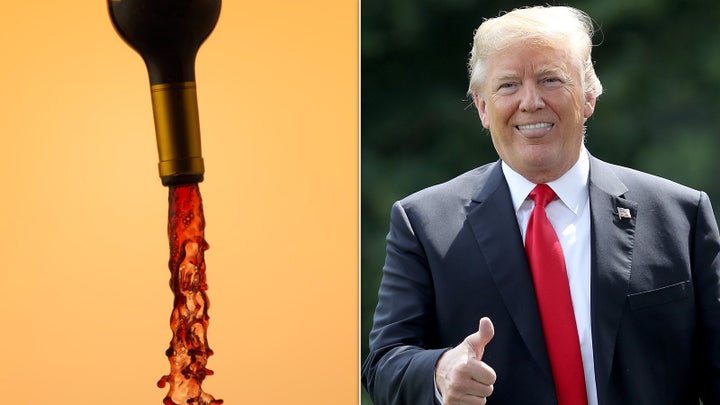
This year, those rituals are being nudged, quietly but consistently, by forces far removed from the bar. New alcohol tariffs — part of President Donald Trump’s push that has taxed imports — are altering what shows up on menus, what bartenders recommend, and what patrons are willing to order, turning global trade policy into something you can taste at happy hour.
Menu prices will change without announcement.
If drinkers sense that bar prices are creeping upward, they’re not wrong. However, the increase is often presented in a gentle manner.
“There is definitely the impression that bar prices have increased this year across the industry,” said Charlotte Voisey, executive director of Tales of the Cocktail Foundation. “It feels less like an isolated shift within hospitality and more reflective of wider economic pressures.”
Voisey has also noticed a rise in value-driven programming. Extended happy hours, promotional cocktails and strategic pricing are designed to soften the blow without alienating guests.
Even luxury hotel bars are leaning into these tactics, a sign that cost pressure is not confined to casual spaces.
Champagne is the canary in the coal mine.
Behind many American bars, the majority of what’s poured is imported. Champagne, tequila, Scotch whisky and amaro are categories legally tied to specific regions and countries.
“Tariffs are certainly going to continue to impact the bar and cocktail industry in 2026,” said Alex Jump, director of operations and owner at The Peach Crease Club in Denver. “The majority of the items we sell at the bar are international.”
For operators, the challenge isn’t just higher prices. It is the lack of substitutes. Champagne cannot be made in Colorado. Tequila cannot be relocated to Kentucky. Many of the companies making these products already raised prices and shrank packaging during the pandemic years.
Beyond the bottle, Jump notes, tariffs ripple outward. Glassware, furniture, paper goods and plastic goods often come from outside the United States. While opening the Peach Crease Club, Jump recalls being asked to write a $90 check on delivery to cover tariffs on glassware alone.
Some items can be swapped for U.S.-made alternatives. Many cannot.
“We do not plan to remove foreign products from our menu,” Jump said. “Doing so would be detrimental to the diversity of our offerings and the quality of our menu.”
Some favorites will get priced off the menu.
At Prost DC and Vagabond Bar + Kitchen, beverage director John Cooper has already had to make tough calls.
“I’ve had to make pivots away from some of our wines that went up as much as $7 a bottle because of tariffs,” he said. French and Italian wines, longtime staples, have been partially replaced with domestic options that keep menus accessible.
Beer hasn’t escaped either. Cooper said draft prices rose by $2 to $4 per half liter to maintain profitability. A long-running goal of keeping pours under $10 is now largely out of reach, with many drinks landing in the $12 to $15 range.
“We’ve remained dedicated to being an affordable option,” he said, noting that guests, for the most part, understand. “The price of everything has gone up.”
Fewer bottles means higher stakes.
From a legal and supply-chain perspective, the concern is broader than price alone.
“Tariff hikes are still causing widespread disruption within the alcohol industry,” said Marbet Lewis, founding attorney at Spirit Law Partners. Suppliers are exporting less. Retailers are narrowing inventory. Consumers are feeling it in two critical ways: higher costs and fewer choices.
Spirits have been hit especially hard, she said, as retaliatory tariffs reduce U.S. exports abroad while making imports more expensive at home. Some once-reliable bottles are drifting toward luxury status, rare treats rather than shelf staples.
Several retailers Lewis works with have shifted their menus toward domestic products, not out of preference, but out of necessity.
Profit margins are getting smaller and smaller.
“With most of our wine coming from Europe, we’ve seen about a buck-a-bottle bump on our end,” said Vic Christopher, president and founder of Clark House Hospitality in Troy, New York. That dollar may not sound dramatic, but in restaurants, it compounds fast.
“Even if you’re really good in the restaurant business, you’re running at a 5% profit margin,” Christopher said. “That means that $0.95 of every dollar goes right back into the economy.”
Tariffs don’t land in isolation. Insurance, utilities, labor, literally everything has risen in tandem. “It’s death of a thousand cuts,” Christopher said, particularly for independent operators who don’t have the scale to absorb rising costs quietly.
“When a restaurant fails, everyone takes a hit,” he added. “Local farms, employment in the community, and quality of life is impacted for so many people.”
So what’s the TL;DR?
For drinkers, the future won’t mean the disappearance of Champagne or tequila. But it may change how often they appear and at what price.
Imported wines and spirits are likely to become more selective menu items, while U.S.-made whiskey, rum, vodka and emerging domestic agave spirits could gain ground. Happy hour may continue to expand, becoming less of a perk and more of a survival strategy.
Politics may feel far removed from a cocktail glass. But in 2026, it is already shaping what gets poured and the cost to raise a toast.