While some thing the Congress must have to approve the stimulus checks, the President thinks and says otherwise
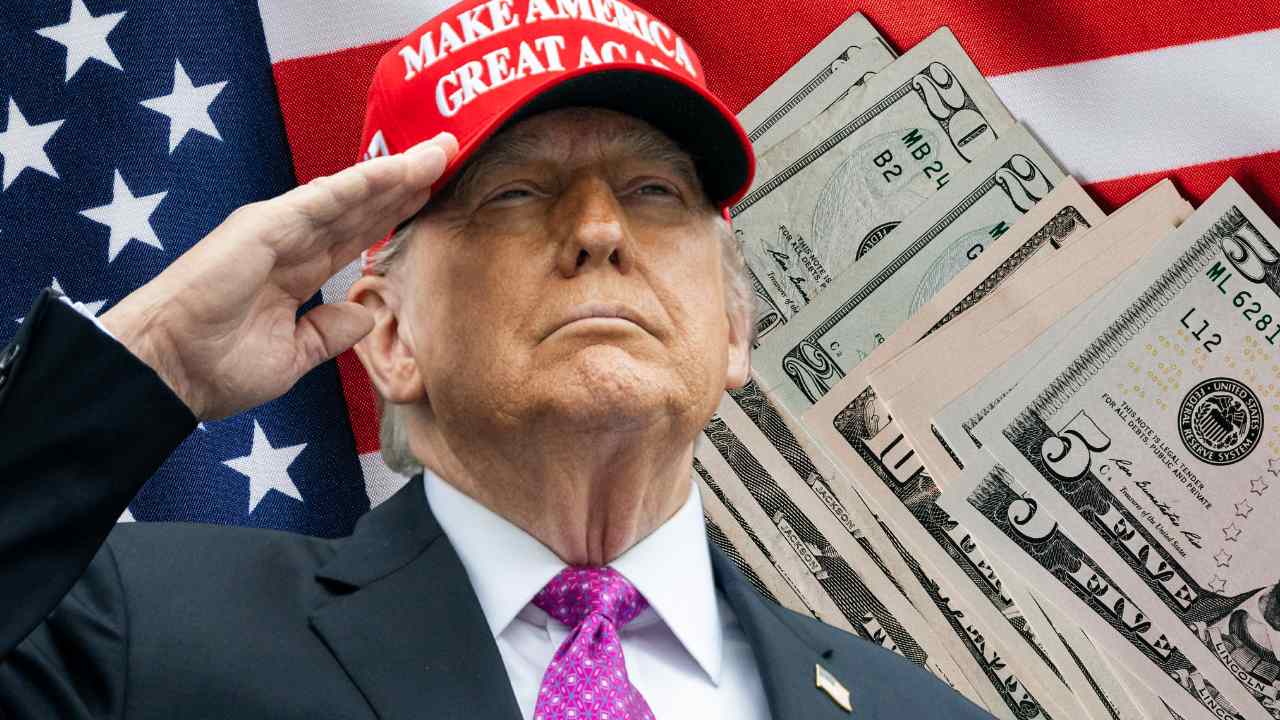
President Donald Trump has reiterated his promise to deliver $2,000 stimulus checks to millions of Americans, now claiming he will do so without congressional approval. Yes, you read that right: he says senators and representatives will have no power to oppose it.
This statement, made in a recent interview, directly contradicts the opinion of his own economic advisors and the constitutional interpretation held by legal experts from both parties. The campaign slogan of sending everyone stimulus checks has become a complex legal, fiscal, and political puzzle.
The Road to Trump’s $2,000 Stimulus Checks
The idea, initially dubbed the “tariff dividend,” emerged in mid-2025. Trump presented it as a mechanism to return to citizens “the money collected from tariffs on foreign goods.”
In November, through his platform Truth Social, he specified the amount: $2,000 per person for “low- and middle-income families.” Its political appeal in an election year is clear, but its viability is diminished by practical obstacles.
The first and biggest road block is the legislature, and it’s the one he has now challenged. Kevin Hassett, chairman of Trump’s Council of Economic Advisers, made it clear in December that “Congress will have to define” how to send that money to those people, effectively contradicting the self-sufficiency his boss proclaims.
Trump’s Stimulus Checks: The Hurdles to Surpass
The U.S. Constitution is quite explicit on this point. The power to spend federal funds resides with the House of Representatives and the Senate. Any program of this magnitude requires a budgetary allocation approved by law. A spokesperson for the Democratic leadership in the Senate, when asked about the matter, has already labeled the idea a “budgetary fantasy” and promised “a constitutional battle” if it is implemented without their approval.
The second problematic obstacle is funding. Trump claims that tariffs have generated “close to $600 billion,” a figure not supported by official data. According to analyses by the Joint Committee on Taxation and the Treasury, actual revenue from tariffs for 2025 is projected to be around $289 billion.
The cost of the checks, however, is overwhelmingly higher. Conservative estimates, which only include taxpayers with incomes below $75,000 annually, calculate an outlay of between $450 billion and $660 billion. That is, even using all tariff revenues (which are already earmarked for existing programs), it wouldn’t be enough to finance even half of the promise. The gap is hundreds of billions.
Approving a Stimulus Check Plan Isn’t Quick
Adding to this equation is a legal time bomb. The Supreme Court is currently hearing a case that challenges the very legality of the tariff structure implemented by the previous Trump administration.
A ruling against it would not only cut off those future revenues, but could also order the return of amounts already collected, creating an unmanageable fiscal deficit. The entire “dividend” structure is built on foundations that the courts could bring down.
The “Warrior Dividend” That Does Exist
While this macro-plan is being debated, the administration has managed to implement a similar program on a smaller scale: the “Warrior Dividend.” Approved by Congress at the end of 2025, this provides a one-time payment of $1,776 to retired and active service members.
Its existence is a double-edged sword: on the one hand, it demonstrates the political will behind the idea of a “dividend”; on the other, it underscores that, even for a specific group and with funds already allocated, a legislative vote was necessary.