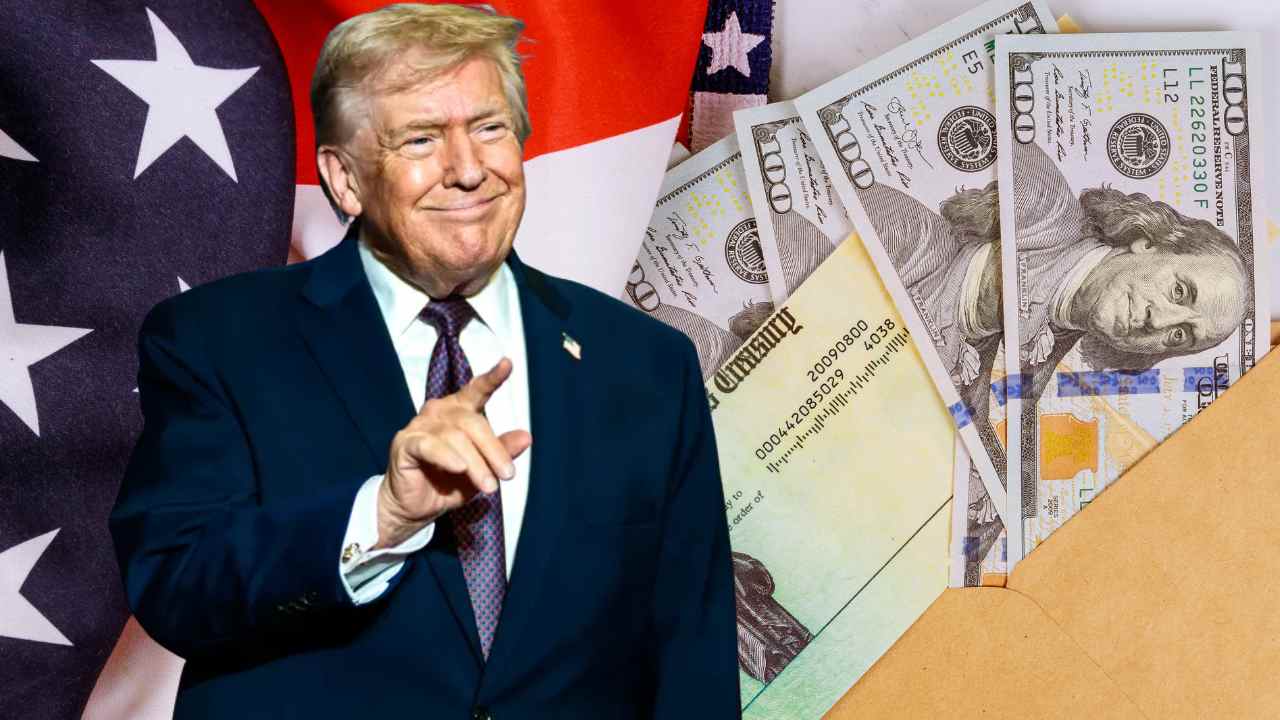
WASHINGTON — President Donald Trump announced from the White House that he is considering issuing $2,000 stimulus checks to Americans, claiming the payments could be financed entirely through tariff revenues and potentially implemented without congressional approval. The proposal immediately triggered debate among lawmakers, economists, and legal experts, raising questions about its feasibility, legality, and economic impact.
Speaking during a press conference, Trump suggested the administration might move forward independently. “I don’t think we have to go through Congress, but we’ll see,” he said, a remark that contrasted sharply with prior statements from senior economic officials.
🚨📰 “@POTUS is following through on making America greater than ever before, and he is keeping his promise to protect and strengthen Social Security for generations to come.”
READ MORE from Commissioner Bisignano on how SSA is improving operations under POTUS @WashTimesOpEd…
— Social Security (@SocialSecurity) January 22, 2026
Internal Disagreements Within the Administration
The president’s comments appear to conflict with earlier guidance from Kevin Hassett, Director of the National Economic Council, who said in December that any direct payments to Americans would require approval from both the House and Senate. The apparent contradiction highlights internal uncertainty over how—or whether—the proposal could move forward, particularly in an election year where economic messaging carries heightened political stakes.
Treasury Secretary Scott Bessent has indicated that the administration is still exploring options. A preliminary income cap of $100,000 per year has been discussed for eligibility, though officials emphasized that no final threshold has been established and that policy details remain fluid.
Cost Concerns and Tariff Revenue Gap
Budget analysts say the biggest challenge is financial. According to estimates from the Committee for a Responsible Federal Budget, sending $2,000 checks to eligible Americans could cost around $600 billion. The Tax Foundation places the potential cost between $280 billion and $607 billion, depending on eligibility rules.
By contrast, annual tariff revenues are expected to generate significantly less than that amount, leading economists to question how the administration would cover the shortfall without additional borrowing or a reduced number of recipients. Critics argue that tariffs themselves are largely paid by American consumers and businesses, potentially offsetting the intended benefit of the stimulus.
Legal Questions Remain Unresolved
Legal scholars note that Congress controls federal spending, and any attempt to issue large-scale direct payments without legislative authorization would likely face court challenges. While presidents have some discretion in reallocating limited funds, experts say a program of this magnitude would be unprecedented without congressional approval.
As of now, the White House has not identified a specific legal mechanism to implement the payments independently.
What the Checks Could Mean for American Households
If the payments were to materialize, economists say most Americans would likely use the funds for essential expenses, mirroring spending patterns seen during the pandemic-era stimulus programs. Rent or mortgage payments, utility bills, groceries, and medical costs would likely take priority for many households struggling with persistent inflation and high interest rates.
Some recipients with greater financial stability might use the money to rebuild emergency savings, cover major car or home repairs, or invest in education or job training. While these uses offer longer-term benefits, analysts caution that one-time payments do not address underlying structural economic pressures.
An Uncertain Path Forward
For now, Trump’s $2,000 stimulus proposal remains conceptual rather than concrete. No legislation has been introduced, funding sources remain disputed, and legal authority is unclear. While the announcement has captured public attention, experts across the political spectrum agree that significant hurdles stand between the proposal and any actual payments reaching Americans’ bank accounts.
Until more details emerge, the plan represents a bold political signal—but one whose real-world impact is still far from certain.