By Sean Williams, | Updated 5
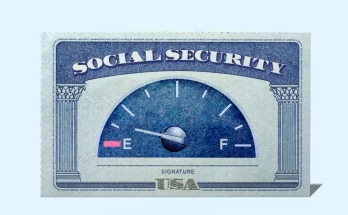
Warnings about the future of Social Security are growing louder: benefit cuts are increasingly likely in the next decade if lawmakers fail to act. While no immediate reductions have been approved, economists say the system is approaching a critical point where automatic changes could reduce payments for millions of Americans.
At the center of the discussion is the Social Security Administration (SSA), which administers benefits for more than 70 million people. The program remains operational and continues to pay full benefits in 2026—but its long-term financial outlook is under pressure.
👉 The key reality:
Cuts are not happening today—but under current law, they could happen automatically in the early 2030s.
This report explains why cuts are being discussed, what role recent policy decisions may play, and what it could mean for your future Social Security income.
🚨 The Core Issue: Social Security’s Funding Gap
Social Security operates primarily through payroll taxes paid by workers and employers. For years, those revenues have been sufficient to cover benefits—but that balance is shifting.
📊 Social Security Financial Outlook
| Category | Projection |
|---|---|
| Trust fund depletion | ~2032–2034 |
| Benefits payable after depletion | ~75%–80% of scheduled benefits |
| Potential reduction | ~20%–28% cut |
| Beneficiaries affected | 70+ million Americans |
👉 If the trust fund is depleted and no reforms are enacted, benefits would be automatically reduced under existing law.
📉 Why Experts Say “Cuts Are Coming”
The phrase “cuts are coming” reflects projections—not enacted policy. However, those projections are widely accepted among economists.
📊 Key Drivers of the Shortfall
| Factor | Impact |
|---|---|
| Aging population | More retirees collecting benefits |
| Lower birth rates | Fewer workers contributing |
| Longer life expectancy | Benefits paid over longer periods |
| Rising costs | Increased financial burden |
👉 In simple terms:
More money is going out than coming in.
⚖️ The Role of Recent Policy Decisions
The claim that President Donald Trump “sped up the process” is part of an ongoing political debate.
📊 What Has Actually Happened
| Issue | Status |
|---|---|
| Direct benefit cuts | ❌ Not enacted |
| Retirement age increase (new law) | ❌ Not passed in 2026 |
| Major reform legislation | ❌ Not implemented |
| Administrative and budget changes | ✔ Occurring |
👉 While no law has reduced Social Security benefits directly, analysts argue that delaying comprehensive reform can increase the likelihood of sharper changes later.
⚠️ How Inaction Can Accelerate Future Cuts
One of the most important factors is timing.
📊 Why Delay Matters
| Scenario | Outcome |
|---|---|
| Early reform | Gradual, smaller adjustments |
| Delayed action | Larger, more abrupt changes |
| No action | Automatic benefit cuts |
👉 Experts warn that postponing reform could force steeper cuts in a shorter timeframe.
💰 Proposed Changes That Could Affect Benefits
Lawmakers have introduced a range of proposals—some would increase funding, while others could reduce benefits for certain groups.
📊 Major Reform Proposals
| Proposal | Potential Effect |
|---|---|
| Raise payroll taxes | More funding for system |
| Increase wage cap | Higher contributions from top earners |
| Raise retirement age | Lower lifetime benefits |
| Adjust benefit formula | Smaller monthly payments |
| Cap benefits for high earners | Reduced payouts for some retirees |
👉 One widely discussed idea would cap benefits at roughly:
- $50,000 per year for individuals
- $100,000 per year for couples
📊 “Hidden Cuts”: Changes That Reduce Benefits Indirectly
Not all reductions appear as direct cuts.
📊 Indirect Benefit Reductions
| Change | Effect |
|---|---|
| Raising full retirement age | Delays access to full benefits |
| Slower COLA adjustments | Reduces purchasing power |
| Increased taxation of benefits | Lowers net income |
| Means-testing | Limits benefits for higher earners |
👉 These changes are often described as “backdoor cuts”, because they reduce lifetime income without explicitly lowering monthly payments.
📉 Who Would Be Most Affected?
The impact of potential changes would vary widely.
📊 Impact by Group
| Group | Potential Impact |
|---|---|
| Current retirees | Smaller COLA increases or future adjustments |
| Near-retirees | Changes to claiming strategies |
| Younger workers | Higher taxes and lower future benefits |
| High earners | Possible benefit caps or reduced payouts |
📅 Timeline: When Could Changes Happen?
📊 Expected Timeline
| Timeframe | Likely Developments |
|---|---|
| 2026–2028 | Policy debate intensifies |
| Late 2020s | Gradual reforms possible |
| Early 2030s | Automatic cuts if no action |
👉 The critical window for action is before the early 2030s.
💡 What Could Prevent Benefit Cuts?
Policymakers have several options to stabilize the system.
📊 Potential Solutions
| Solution | Impact |
|---|---|
| Raise payroll tax rate | Increases funding |
| Lift or remove wage cap | Expands tax base |
| Reduce benefits | Lowers payouts |
| Combination approach | Balances impact |
👉 Most experts agree that a combination of measures is the most realistic solution.
📊 Social Security Benefits in 2026
Despite long-term concerns, benefits remain stable today.
📊 Average Monthly Benefits
| Category | Amount |
|---|---|
| Retired worker | ~$2,071 |
| Retired couple | ~$3,200+ |
| Disabled worker | ~$1,580–$1,630 |
| Survivor benefits | ~$1,600–$1,900 |
📊 Maximum Monthly Benefits
| Retirement Age | Maximum Benefit |
|---|---|
| 62 | ~$2,969 |
| 67 | ~$4,152 |
| 70 | ~$5,181 |
👉 These amounts include the 2.8% COLA increase for 2026.
📉 Why the Issue Feels Urgent Now
Several factors are bringing renewed attention to Social Security:
📊 Current Pressure Points
| Factor | Explanation |
|---|---|
| Rising number of retirees | Increased payouts |
| Economic uncertainty | Affects payroll tax revenue |
| Political gridlock | Slows reform efforts |
| Public concern | Growing awareness of future risks |
⚠️ Common Misconceptions
| Myth | Reality |
|---|---|
| “Cuts are happening now” | ❌ Benefits remain unchanged |
| “Social Security is going bankrupt” | ❌ It will still pay partial benefits |
| “One policy caused the problem” | ❌ Long-term structural issue |
| “Nothing can fix it” | ❌ Multiple solutions exist |
📊 Social Security Snapshot (2026)
| Category | Details |
|---|---|
| Average monthly benefit | ~$2,071 |
| Maximum benefit | ~$5,181 |
| COLA increase | 2.8% |
| Trust fund outlook | Depletion ~2032–2034 |
| Key risk | Automatic cuts if no reform |
🧾 The Bottom Line
- ✔ Social Security continues to pay full benefits in 2026
- ⚠️ Long-term projections show potential cuts of 20%–28%
- ✔ No direct benefit cuts have been enacted
- ⚠️ Delays in reform may increase future impact
- ✔ Policy changes are widely expected in the coming years
📌 Final Word
The warning that “Social Security benefit cuts are coming” reflects a growing consensus among economists—but not an immediate policy change.
The system is not collapsing—but it is approaching a point where difficult decisions must be made.
For Americans planning retirement, the message is clear:
Stay informed, plan conservatively, and be prepared for a system that may evolve before you rely on it fully.