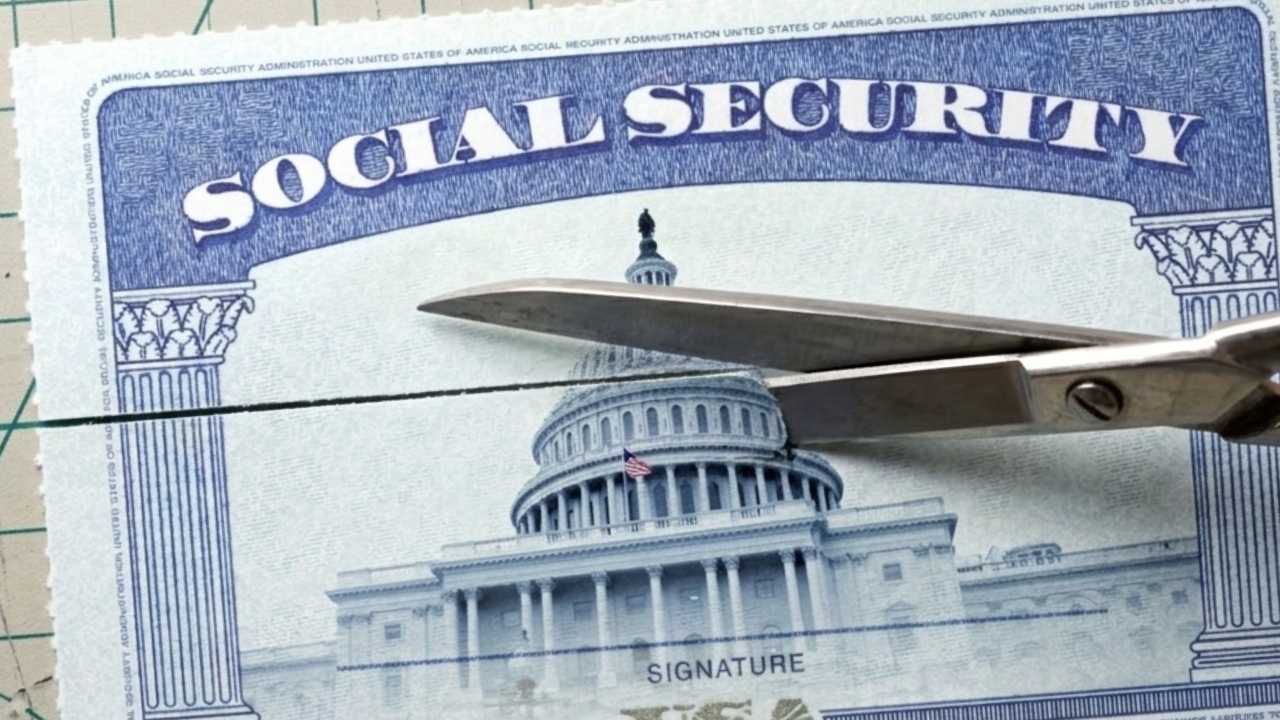
For more than 70 million Americans, Social Security provides an essential source of retirement, disability, and survivor income. But unless Congress takes action in the coming years, the program could face automatic benefit reductions that would affect millions of beneficiaries.
The possibility of a future cut has become one of the most closely watched issues in retirement planning, as lawmakers continue searching for ways to strengthen Social Security’s long-term finances.
Why Is a Benefit Cut Being Discussed?
According to the latest projections from the Social Security Trustees, the Old-Age and Survivors Insurance (OASI) Trust Fund is expected to become depleted around 2032.
If that happens and Congress does not enact changes beforehand, Social Security would continue collecting payroll tax revenue. However, those ongoing revenues would not be sufficient to cover all scheduled benefits.
Under current projections, retirement benefits could be reduced by approximately 22%, bringing payments into line with available income.
What’s Behind the Funding Challenge?
Social Security operates largely on a pay-as-you-go system.
Today’s workers contribute payroll taxes that help finance benefits for today’s retirees and other eligible recipients.
Several long-term demographic trends have increased pressure on the program, including:
- An aging U.S. population.
- Longer average life expectancy.
- Lower birth rates.
- A smaller ratio of workers supporting each beneficiary.
As more Americans retire and fewer workers contribute relative to the number of beneficiaries, the gap between incoming payroll taxes and scheduled benefit payments continues to widen.
Could Benefits Continue Even After the Trust Fund Is Depleted?
Yes.
The depletion of the trust fund does not mean Social Security would stop sending monthly payments.
Payroll taxes would continue flowing into the system, allowing the program to pay a substantial portion of scheduled benefits.
The projected reduction reflects the difference between expected tax revenue and the amount needed to pay full benefits under current law.
Could Disability Funds Help?
Social Security also operates a separate Disability Insurance (DI) Trust Fund, which finances disability benefits.
Some policymakers have suggested combining or reallocating resources between the retirement and disability trust funds.
Supporters argue that doing so could temporarily reduce the size of any future benefit reduction.
However, experts generally note that such a step would delay rather than permanently solve the program’s long-term funding challenges unless broader reforms are adopted.
What Options Does Congress Have?
Lawmakers have discussed a wide range of possible solutions over the years.
Some of the most frequently proposed ideas include:
Raising Payroll Taxes
Increasing the Social Security payroll tax rate could generate additional revenue for the program.
While this approach would strengthen finances, it would also increase payroll taxes paid by workers and employers.
Expanding Taxable Earnings
Currently, Social Security payroll taxes apply only up to an annual wage limit.
One proposal would require higher-income earners to pay payroll taxes on more—or all—of their wages, increasing revenue without affecting most workers.
Adjusting the Full Retirement Age
Another proposal would gradually increase the Full Retirement Age for future retirees.
Supporters argue that Americans are living longer than when the program was created.
Critics contend that increasing the retirement age would effectively reduce lifetime benefits for many future retirees.
Combining Multiple Reforms
Many analysts believe Congress may ultimately adopt a combination of revenue increases and program adjustments rather than relying on a single solution.
Has Congress Solved Similar Problems Before?
Yes.
Social Security has experienced funding challenges in the past.
In 1983, Congress approved a bipartisan package of reforms that strengthened the program’s finances and extended its solvency for decades.
Many policy experts believe lawmakers will eventually act again, although the timing and specific reforms remain uncertain.
What Should Future Retirees Do?
Because no final legislative solution has been adopted, financial planners often recommend avoiding dependence on Social Security as the sole source of retirement income.
Building additional retirement savings through employer-sponsored retirement plans, individual retirement accounts (IRAs), pensions, personal investments, or other income sources can help reduce financial risk regardless of future policy decisions.
Diversifying retirement income may also provide greater flexibility if future Social Security reforms change benefit formulas or retirement rules.
Bottom Line
Social Security continues to provide guaranteed monthly income to millions of Americans, but long-term funding challenges remain unresolved. Current projections indicate that, without congressional action, scheduled retirement benefits could face an automatic reduction of about 22% once the retirement trust fund is depleted around 2032. While lawmakers have several options to strengthen the program, no comprehensive reform has yet been enacted. For retirees and future beneficiaries, staying informed and maintaining multiple sources of retirement income remain important parts of long-term financial planning.