Despite short-lived periods of historic volatility under President Donald Trump, few presidents over the last 130 years have overseen higher annualized stock market returns. During Trump’s first term (Jan. 20, 2017-Jan. 20, 2021), the mature-stock-driven Dow Jones Industrial Average (DJINDICES:^DJI), benchmark S&P 500 (SNPINDEX:^GSPC), and tech-propelled Nasdaq Composite (NASDAQINDEX:^IXIC) soared 57%, 70%, and 142%, respectively.
Since the start of his second term (Jan. 20, 2025), these outsize gains have continued, with the Dow, S&P 500, and Nasdaq rising by 19%, 29%, and 39%, respectively, through the closing bell on Sept. 22.
Missed AI’s “Act 1”? Act 2 Could Be 15x Bigger. Most investors think they missed the AI boat because they didn’t buy Nvidia in 2005. But according to our analysts, we’re only at the end of “Act 1″—the R&D phase. “Act 2” is the global rollout. Continue »
While everything has been going swimmingly for the U.S. economy and stock market, cracks appear to be forming in their foundations, courtesy of persistently elevated inflation. Although modest inflation is normal in a growing economy — i.e., businesses should possess some degree of pricing power over their goods and services — what we’ve witnessed in 2026 goes beyond “modest.”
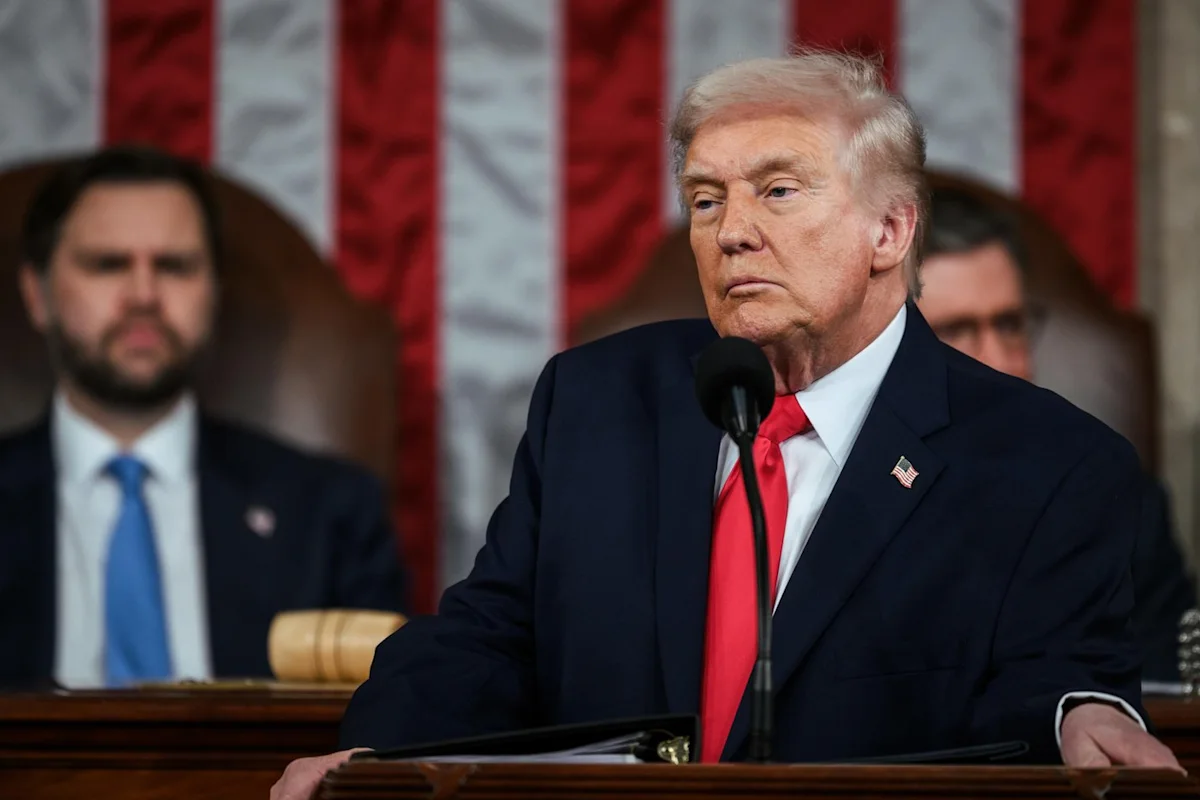
Trumpflation comes with unintended consequences. Image source: Official White House Photo by Daniel Torok.
In May, trailing 12-month (TTM) inflation reached a three-year high of 4.2%, more than double the Federal Reserve’s long-term inflation target of 2%. The catalyst fueling well-above-average inflation is none other than Trumpflation (inflation specifically driven by President Donald Trump’s policies).
Unfortunately for Wall Street and the Fed, Trumpflation is evolving and becoming more entrenched in the U.S. economy.
President Trump’s policies are having unintended consequences on the prevailing inflation rate
Although the headline TTM inflation rate for August pared to 3.4% from the aforementioned three-year high of 4.2% in May, two of President Trump’s policies are having a direct impact on consumer prices: tariffs and the Iran war.
BREAKING: August CPI inflation comes in at 3.4%, in-line with expectations of 3.4%
Core CPI inflation falls to 2.4%, also in-line with expectations of 2.4%.
Month-over-month CPI inflation rose +0.4%, the biggest increase since May 2026.
Treasury yields are rising on the news.
— The Kobeissi Letter (@KobeissiLetter) September 11, 2026
Tariffs have been modestly affecting consumer prices for more than a year. In April 2025, Trump unveiled his “Liberation Day” tariffs, consisting of a sweeping global tariff and higher reciprocal tariffs on dozens of countries deemed to have unfavorable trade balances with the U.S. President Trump imposed these tariffs under the International Emergency Economic Powers Act (IEEPA).
In February 2026, the U.S. Supreme Court voted 6-3 against Trump’s use of tariffs under IEEPA, invalidating them. This court defeat was followed by Trump imposing a 150-day, 10% global import duty under Section 122 of the Trade Act of 1974 that expired on July 24. Finally, in late July, the Trump administration instated global tariffs on more than 80 countries, ranging from 10% to 12.5%, under Section 301 of the Trade Act of 1974.
While tariffs are designed to protect American jobs and enable domestic goods to be price-competitive with those brought in from overseas, they can also raise domestic production costs. Adding duties to unfinished goods/raw materials often leads to higher expenses being passed on to consumers.
JUST IN 🚨: Diesel hits $6.50/gallon for the first time in history 📈 📈 https://t.co/xBSpi6hYcW
— Barchart (@Barchart) September 21, 2026
Meanwhile, the Iran war has had a clear impact on energy prices.
Shortly after Trump gave the go-ahead to attack Iran on Feb. 28, the latter shut down the Strait of Hormuz to virtually all maritime traffic. This action halted the daily movement of approximately 20 million barrels of petroleum liquids.
Removing a fifth of the world’s crude oil supply at the drop of a hat had immediate consequences for the U.S. energy market. Gas prices soared at the fastest pace in three decades, while diesel prices recently climbed to an all-time high.
Vacillating energy commodity prices have been at the center of the wild swings we’ve witnessed in headline inflation since February.
The next phase of Trumpflation is here
If there was a potential silver lining to Trumpflation, it was the belief that Trump’s policies would have a relatively short-lived impact on consumer prices. The pass-through effects of tariffs were expected to wane in 2027, while energy supply disruptions have historically been short-lived.
But things haven’t gone as planned. The rollout of a new round of global tariffs in July further pushes out the year-over-year impact of duties on consumer prices. Perhaps more importantly, the effects of Trumpflation on the U.S. economy concerning the Iran war have entered a new phase.
While the impact on energy prices is front and center for consumers, evidence is mounting that the inflationary effects of the Iran war have become entrenched in the broader economy. In other words, we’re no longer talking about an event that’s just impacting the energy sector.
1/6
A popular narrative is the Fed will make a mistake by hiking into a supply shock (“The Fed cannot print oil!”)
Wrong metric!
Core PCE has run above 2% for 65 months.
This suggests something bigger is happening and focusing on near-term oil/diesel spikes misses it.
🧵 https://t.co/SK4Ral3zCQ— Jim Bianco (@biancoresearch) September 16, 2026
Although this is far from a comprehensive list, the Iran war has had several effects on the broader economy:
-
Petroleum-based goods, such as plastics, synthetic polymers, and tires, are now pricier.
-
Some businesses have been forced to alter transportation methods, shift shipping routes, or change suppliers to adjust for the closure of the Strait of Hormuz. Higher transportation costs are being passed on to retailers and wholesalers, who then pass them on to consumers.
-
Approximately one-third of the world’s fertilizer passes through the Strait of Hormuz, leading to global shortages, lower crop yields, and higher produce prices.
By examining Core Personal Consumption Expenditures (PCE), which excludes volatile food and energy costs, we can tell that Iran-war-driven inflation has reached the broader economy. Whereas headline inflation fell from 4.2% to 3.4% between May and August, Core PCE hardly budged: 3.5% in May to 3.3% in June and July. The price stickiness of Core PCE confirms that Trumpflation has entered its next phase.
Entrenched inflation is a huge problem for Fed Chair Kevin Warsh and the Federal Open Market Committee (FOMC). It typically takes considerable time and a rate-hiking cycle to purge entrenched inflation. In short, there’s no easy fix to a prevailing inflation rate that’s spent 66 consecutive months above the Fed’s long-term 2% target.
Stock Market Shiller PE Ratio on the verge of taking out its Dot Com Bubble all-time high 🚨 🤯 👀 https://t.co/CtCmSgWnLt
— Barchart (@Barchart) July 11, 2026
At the same time, the consequences of entrenched Trumpflation are possibly dire for the second-priciest stock market in history. Wall Street’s artificial intelligence (AI)-powered rally needs everything to go perfectly. If the FOMC delivers several additional rate hikes beyond the quarter-point interest rate increase on Sept. 16, it could slow the AI infrastructure build-out and force investors to rethink the otherworldly valuations assigned to AI stocks.
The more entrenched Trumpflation becomes, the worse the consequences for Wall Street.
Should you buy stock in S&P 500 Index right now?
Before you buy stock in S&P 500 Index, consider this:
The Motley Fool Stock Advisor analyst team just identified what they believe are the 10 best stocks for investors to buy now… and S&P 500 Index wasn’t one of them. The 10 stocks that made the cut could produce monster returns in the coming years.
Consider when Netflix made this list on December 17, 2004… if you invested $1,000 at the time of our recommendation, you’d have $383,680!* Or when Nvidia made this list on April 15, 2005… if you invested $1,000 at the time of our recommendation, you’d have $1,382,954!*
Now, it’s worth noting Stock Advisor’s total average return is 937% — a market-crushing outperformance compared to 214% for the S&P 500. Don’t miss the latest top 10 list, available with Stock Advisor, and join an investing community built by individual investors for individual investors.
*Stock Advisor returns as of September 27, 2026.
Sean Williams has no position in any of the stocks mentioned. The Motley Fool has no position in any of the stocks mentioned. The Motley Fool has a disclosure policy.
The Next Phase of Trumpflation Has Arrived, and It’s Terrible News for the Federal Reserve and Wall Street was originally published by The Motley Fool