Benzinga and Yahoo Finance LLC may earn commission or revenue on some items through the links below.
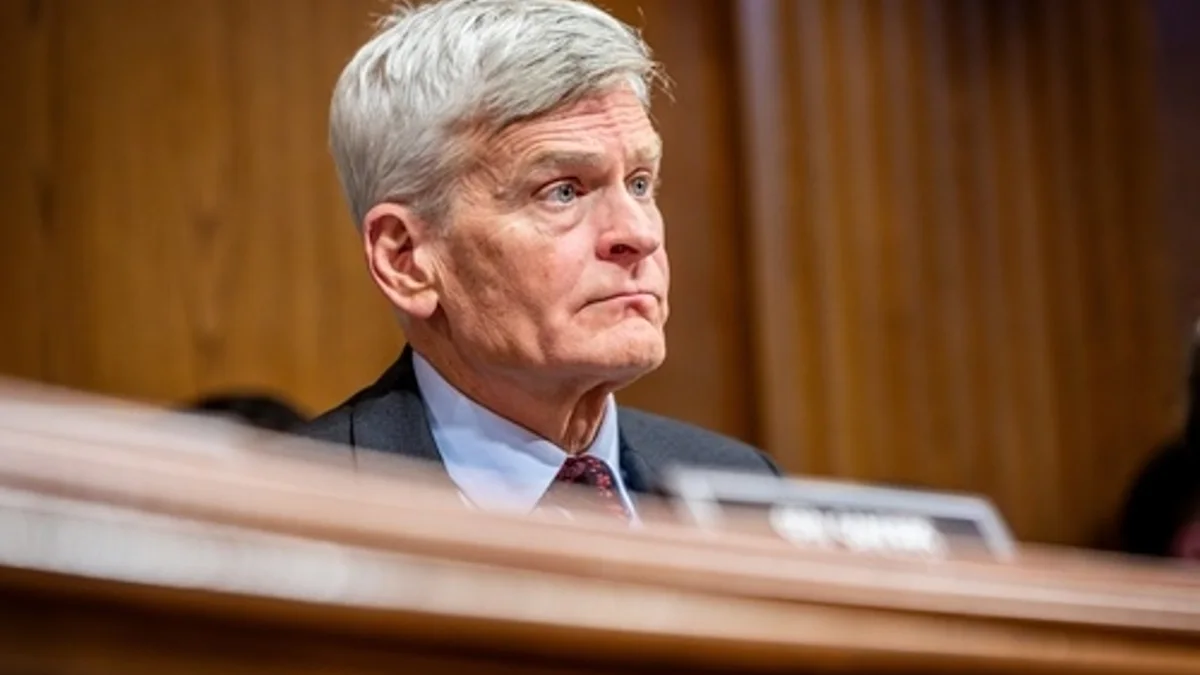
On Sunday, Sen. Bill Cassidy (R-La.) said a proposed $1.5 trillion investment fund could cover up to 70% of Social Security’s funding needs while warning that congressional inaction is putting the program’s future at risk.
Cassidy’s $1.5 Trillion Proposal
Cassidy made the remarks during an interview with Margaret Brennan on CBS News’ Face The Nation, saying he had commitments from Senate Majority Leader John Thune (R-S.D.) and Sen. Mike Crapo (R-Idaho) to hold a hearing and markup on a Social Security bill.
Don’t Miss:
-
Tired of watching real estate prices climb while you sit on the sidelines? You may be able to invest without buying a single property
-
Credit card debt just hit $1.29 trillion. If you’re carrying a balance, these moves could help you get ahead of it
The Senator said President Donald Trump had personally committed to supporting the legislation. “I have Democrats who are also supportive. It’s a bipartisan bill.”
However, he said Senate Finance Committee ranking member Sen. Ron Wyden (D-Ore.) “does not want to be constructive.”
Cassidy said the proposal would borrow $1.5 trillion, place it in an investment fund separate from the Social Security Trust Fund and invest it in the broader economy over six decades. He said the fund could eventually pay for up to 70% of what is needed to cover Social Security’s debt.
He added that while Wyden opposed investing taxpayer money in the stock market, he had previously backed a similar policy for the federal railroad retirement system under President George W. Bush.
He said the legislation could receive 60 Senate votes, pass the House and be signed by the president. Cassidy added that Congress should act now because “Social Security has been looking ill for some time.”
Trending: Trump promised to make America the crypto capital of the world. Here’s what’s happened so far — and what’s coming next
Cassidy On Healthcare Costs
Cassidy also criticized rising healthcare expenses, saying costs were “sky-high” and continuing to increase, while small businesses were dropping health coverage and employees were struggling to afford their deductibles.
He described the situation as a failure and called for accountability over rising costs.
He tied those concerns to his broader criticism of Health and Human Services Secretary Robert F. Kennedy Jr., saying there had been minimal progress on addressing ultra-processed foods. At the same time, the country had lost its measles elimination status and infants were dying from measles.
“If I were president, I would choose someone else because there needs to be accountability for higher healthcare costs, more measles deaths, losing elimination status, and no progress on processed foods,” Cassidy stated.
Social Security Funding Debate
Cassidy had outlined the investment-fund proposal in October, describing a plan to contribute $1.5 trillion over five years, or $250 billion annually.
At the time, he said the fund could cover 60% to 70% of Social Security’s unfunded accrued liability over 65 to 75 years. He also warned that benefits could face a 28.5% cut if Congress did not act.
The funding debate comes as Social Security faces projected shortfalls, with limited appetite for near-term tax increases.
In a November report, Jessica Riedl, a fellow at the Urban-Brookings Tax Policy Center, said payroll tax increases were unlikely in the near term. The report also noted that the retirement trust fund was projected to run out in 2032, potentially triggering a 22% reduction in benefits.
A separate November report citing an AARP Public Policy Institute analysis found that Social Security’s costs exceeded its revenue by $160 billion, or 11%, in 2025.
The analysis further projected that the combined retirement and disability trust funds would be depleted in 2034, after which Social Security would have enough revenue to pay about 83% of scheduled benefits.
Image via Shutterstock
Read Next: Still Learning the Market? These 50 Must-Know Terms Can Help You Catch Up Fast
Building Wealth Across More Than Just the Market
Building a resilient portfolio means thinking beyond a single asset or market trend. Economic cycles shift, sectors rise and fall, and no one investment performs well in every environment. That’s why many investors look to diversify with platforms that provide access to real estate, fixed-income opportunities, precious metals, and even self-directed retirement accounts. By spreading exposure across multiple asset classes, it becomes easier to manage risk, capture steady returns, and create long-term wealth that isn’t tied to the fortunes of just one company or industry.
EquityMultiple
For accredited investors looking beyond stocks and bonds, EquityMultiple provides access to vetted commercial real estate deals starting at $5,000, with only ~5% of opportunities passing their due diligence process.
Arrived
Backed by Jeff Bezos, Arrived Homes makes real estate investing accessible with a low barrier to entry. Investors can buy fractional shares of single-family rentals and vacation homes starting with as little as $100. This allows everyday investors to diversify into real estate, collect rental income, and build long-term wealth without needing to manage properties directly.
Bito
As AI coding tools take on more of the work traditionally done by developers, companies are facing new challenges around code quality, context and the rising cost of AI-powered development. Bito is building software designed to help AI coding agents better understand complex codebases while helping companies control AI development costs. Founded by former PubMatic executives, Bito has raised more than $10 million from institutional and individual investors and is now raising additional capital through a Wefunder offering, giving investors an opportunity to invest in a company targeting an emerging need within the rapidly expanding AI software market.
FarmTogether
Farmland has historically held its value through market volatility and delivered returns uncorrelated to stocks and bonds. For accredited investors, FarmTogether offers direct access to high-quality U.S. farmland starting at $15,000 — fully managed, with no landlord headaches.
Fundrise
Private real estate and private credit can add income and stability to a stock-heavy portfolio. Fundrise offers access to diversified private real estate and credit strategies through an easy-to-use platform, with professionally managed portfolios designed to generate passive income and long-term growth.
© 2026 Benzinga.com. Benzinga does not provide investment advice. All rights reserved.