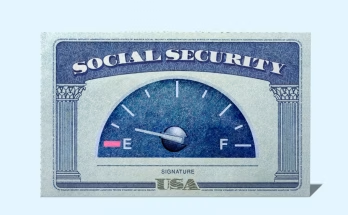
As inflation, healthcare costs, and everyday living expenses continue rising in 2026, more retirees are returning to the workforce after leaving full-time employment.
But many Americans are discovering that going back to work after retirement can directly affect their Social Security benefits — especially if they claimed payments before reaching full retirement age.
The rules can become confusing quickly, and in some cases, retirees may temporarily lose part of their monthly benefits if their earnings exceed federal limits.
Here’s what retirees need to know before returning to work while collecting Social Security.
Can You Work and Receive Social Security at the Same Time?
Yes.
The Social Security Administration allows retirees to work while receiving retirement benefits. However, the impact on benefits depends largely on the retiree’s age and annual earnings.
For retirees who already reached full retirement age, there is no earnings limit.
That means they can earn any amount from a job or self-employment without reducing their Social Security payments.
But the rules are different for people who claimed benefits early and have not yet reached full retirement age.
2026 Social Security Earnings Limits
The Social Security Administration applies what is known as the Retirement Earnings Test for beneficiaries who work before reaching full retirement age.
If You Are Under Full Retirement Age All Year
In 2026, retirees under full retirement age can earn up to $24,480 annually before benefits are reduced.
If earnings exceed that limit:
- Social Security withholds $1 in benefits for every $2 earned above the threshold.
If You Reach Full Retirement Age During 2026
A higher earnings limit applies.
Retirees reaching full retirement age this year can earn up to $65,160 before reductions apply to benefits earned before the birthday month.
After that:
- Social Security withholds $1 for every $3 earned above the limit.
Once the retiree officially reaches full retirement age, the earnings test disappears completely.
Social Security Earnings Rules in 2026
| Situation | 2026 Earnings Limit | Benefit Reduction Rule |
|---|---|---|
| Under full retirement age all year | $24,480 | $1 withheld for every $2 above limit |
| Reaching full retirement age in 2026 | $65,160 | $1 withheld for every $3 above limit |
| At full retirement age or older | No limit | No reduction in benefits |
Are the Lost Benefits Gone Forever?
Not necessarily.
One of the biggest misconceptions about the Social Security earnings test is that withheld benefits disappear permanently.
In reality, the Social Security Administration recalculates benefits after retirees reach full retirement age and credits back months in which payments were reduced or withheld.
That means future monthly benefits may gradually increase later in retirement.
Still, retirees can face short-term financial pressure if they unexpectedly lose part of their monthly payments while working.
What Income Counts Toward the Earnings Limit?
The earnings test only applies to earned income.
That includes:
- Wages from employment
- Self-employment income
- Bonuses
- Commissions
- Vacation pay
The Social Security Administration does not count:
- Pension payments
- Investment income
- Retirement account withdrawals
- Annuities
- Interest income
- Veterans benefits
Returning to Work Can Also Affect Taxes and Medicare
Financial experts say Social Security reductions are only part of the equation.
Additional income from returning to work may also:
- Increase federal income taxes
- Cause more Social Security benefits to become taxable
- Raise Medicare Part B and Part D premiums through IRMAA surcharges
Some retirees are surprised to discover that higher income can significantly increase healthcare costs in retirement.
Why More Retirees Are Returning to Work
Economic pressures continue pushing many Americans back into the workforce after retirement.
Common reasons include:
- Inflation
- Rising housing costs
- Healthcare expenses
- Insufficient retirement savings
- Market volatility
- Desire for social engagement or purpose
Some retirees choose part-time jobs, consulting work, or flexible self-employment opportunities to supplement retirement income.
Working Longer Could Increase Future Benefits
Returning to work can sometimes increase future Social Security benefits.
Because Social Security calculates retirement payments using the highest 35 years of earnings, additional years of higher wages may replace lower-earning years in the formula.
That can result in larger monthly checks later on.
What Retirees Should Consider Before Returning to Work
Financial planners say retirees should carefully evaluate several factors before accepting new employment.
Important considerations include:
- Current Social Security claiming age
- Expected annual earnings
- Potential benefit reductions
- Medicare premium impacts
- Tax consequences
- Overall retirement income needs
Some experts recommend speaking with a financial advisor or contacting the Social Security Administration directly before returning to work.
Bottom Line
Going back to work after retirement does not automatically stop Social Security benefits, but it can temporarily reduce payments for retirees who have not yet reached full retirement age.
In 2026, retirees under full retirement age face earnings limits of $24,480, while those reaching full retirement age can earn up to $65,160 before larger reductions apply.
For many retirees, working longer can improve long-term financial security — but understanding how earnings affect Social Security remains critical before returning to the workforce.