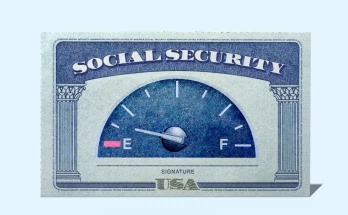
Millions of Americans who receive Social Security benefits are expected to see a major payment-related change this summer as the federal government begins transitioning the Direct Express debit card program to a new financial provider.
The change could affect approximately 3.6 million beneficiaries nationwide, including retirees, disabled workers, and Supplemental Security Income recipients who currently receive federal payments through Direct Express prepaid debit cards rather than traditional bank accounts.
Federal officials say the transition is part of a broader modernization effort involving government payment systems and fraud protection measures.
What Is Changing?
The U.S. Department of the Treasury’s Bureau of the Fiscal Service has selected Fifth Third Bank as the new financial agent for the Direct Express program.
The move replaces Comerica Bank, which previously managed the debit card system used by millions of federal beneficiaries.
Direct Express allows Social Security recipients to receive their monthly federal payments on prepaid debit cards instead of paper checks or direct deposit into personal bank accounts.
Beginning in 2026, new Direct Express enrollments are already being issued through Fifth Third Bank, while existing beneficiaries will gradually transition to replacement cards during the summer and into the coming months.
Who Will Be Affected?
The payment transition primarily impacts beneficiaries who currently receive payments through Direct Express cards, including many recipients of:
- Social Security retirement benefits
- Social Security Disability Insurance (SSDI)
- Supplemental Security Income (SSI)
- Survivor benefits
- Certain federal benefit programs connected to Treasury payment systems
Beneficiaries who already receive payments through direct deposit into personal bank accounts are generally not expected to experience changes.
What Beneficiaries Should Expect This Summer
Federal officials say affected recipients will begin receiving official notices and replacement cards as the transition expands.
Expected Changes for Direct Express Users
| What Changes | What Beneficiaries Need to Know |
|---|---|
| New debit cards issued | Existing cards will eventually be replaced |
| Updated financial provider | Fifth Third Bank becomes the new administrator |
| Activation requirements | Recipients may need to activate replacement cards |
| Updated account information | Some recurring payment setups may need updating |
| Fraud prevention measures | Officials warn beneficiaries to watch for scams |
Existing Comerica-issued cards may continue functioning temporarily during the transition period until replacement cards are fully activated.
Officials Urge Beneficiaries to Update Contact Information
The Social Security Administration is encouraging recipients to make sure mailing addresses and account information remain current.
That is especially important because:
- New debit cards will arrive through the mail
- Advance transition notices are being sent to beneficiaries
- Incorrect addresses could delay access to benefits
Recipients who recently moved may need to update their information with the Social Security Administration as soon as possible.
Fraud Risks Are Rising During the Transition
Government agencies and consumer advocates are also warning beneficiaries about increased scam activity linked to the payment change.
Criminals often target older Americans during periods of major government benefit transitions.
Officials warn recipients to avoid:
- Sharing Social Security numbers with unknown callers
- Clicking suspicious email or text links
- Providing banking details to unverified sources
- Responding to unsolicited payment-related messages
The Social Security Administration says official communications about Direct Express changes will typically arrive through secure mail notifications or verified government channels.
Why the Government Is Making the Change
Federal officials say the Treasury Department periodically updates financial service contracts tied to federal payment systems.
The transition is expected to improve:
- Payment processing efficiency
- Fraud monitoring
- Account security
- Mobile account management
- Customer support systems
The government has increasingly shifted toward electronic payments in recent years as part of broader efforts to reduce fraud risks and administrative costs associated with paper checks.
Direct Deposit May Become More Popular
Financial experts note that some beneficiaries may choose to move away from prepaid debit cards entirely and switch to direct deposit through traditional bank accounts.
Direct deposit is often viewed as:
- Faster
- More secure
- Easier to manage long-term
- Less vulnerable to lost cards or delivery problems
However, Direct Express remains an important option for beneficiaries who do not maintain personal bank accounts.
Payment Systems Continue Evolving in 2026
The Direct Express transition arrives during a broader modernization effort involving Social Security services nationwide.
Recent federal updates have included:
- Expanded online account services
- Enhanced fraud-prevention systems
- Digital identity verification tools
- Faster direct-deposit processing
- Increased electronic communication options
More than 70 million Americans currently receive Social Security or Supplemental Security Income benefits, making payment system reliability a major national priority.
Bottom Line
A major Social Security payment system transition is expected to affect approximately 3.6 million beneficiaries this summer as the Direct Express program moves to a new financial provider.
While recipients using standard bank direct deposit are unlikely to notice changes, millions of Direct Express users should closely monitor official mail notices, replacement debit cards, and activation instructions in the coming months to avoid disruptions in access to their federal benefits.