
With Trump headed back to the White House, “higher ed is in for a rough ride,” says Trinity Washington president Patricia McGuire.
Social Security payments follow a normal schedule in December and will be the last check before the next cost-of-living increase takes effect. The date of the next December payment is approaching.
Social Security benefits, paid primarily to older or retired beneficiaries, are usually paid on Wednesdays. If your birthday falls between the 1st and 10th of the month, your payments are issued on the second Wednesday of the month, according to the Social Security Administration’s schedule.
🚨FACT CHECK: Every day, SSA is serving Americans where they choose to be served. More people are choosing to manage their benefits online or on the phone than ever before! https://t.co/Fws5fbap5m https://t.co/o5pWWsg1CF pic.twitter.com/evC5tqYrr1
— Social Security (@SocialSecurity) December 2, 2025
This sure sounds like another way to make it even harder for Americans to get the benefits they’ve earned.
I will not stop fighting to protect Social Security. pic.twitter.com/TGtXARd25V
— Elizabeth Warren (@SenWarren) December 1, 2025
Do you need a new or replacement Social Security card? Find out if you can complete your request without having to visit our office: https://t.co/MxCpi4E7cM. pic.twitter.com/dXcDrmFMY7
— Social Security (@SocialSecurity) November 29, 2025
beneficiaries will receive larger checks thanks to a 2.8% cost-of-living adjustment
Eligibility and requirements for Social Security payment
Social Security performance
We serve more than 300 million Americans who have an active Social Security number, and more than 70 million people depend on Social Security benefits. We are committed to meeting people where they want to be served. The most convenient way for customers to access our services is by using your personal my Social Security account, which provides immediate access to important information and tools, putting you in control of your time. You can use your personal my Social Security account 24 hours a day, 7 days a week.
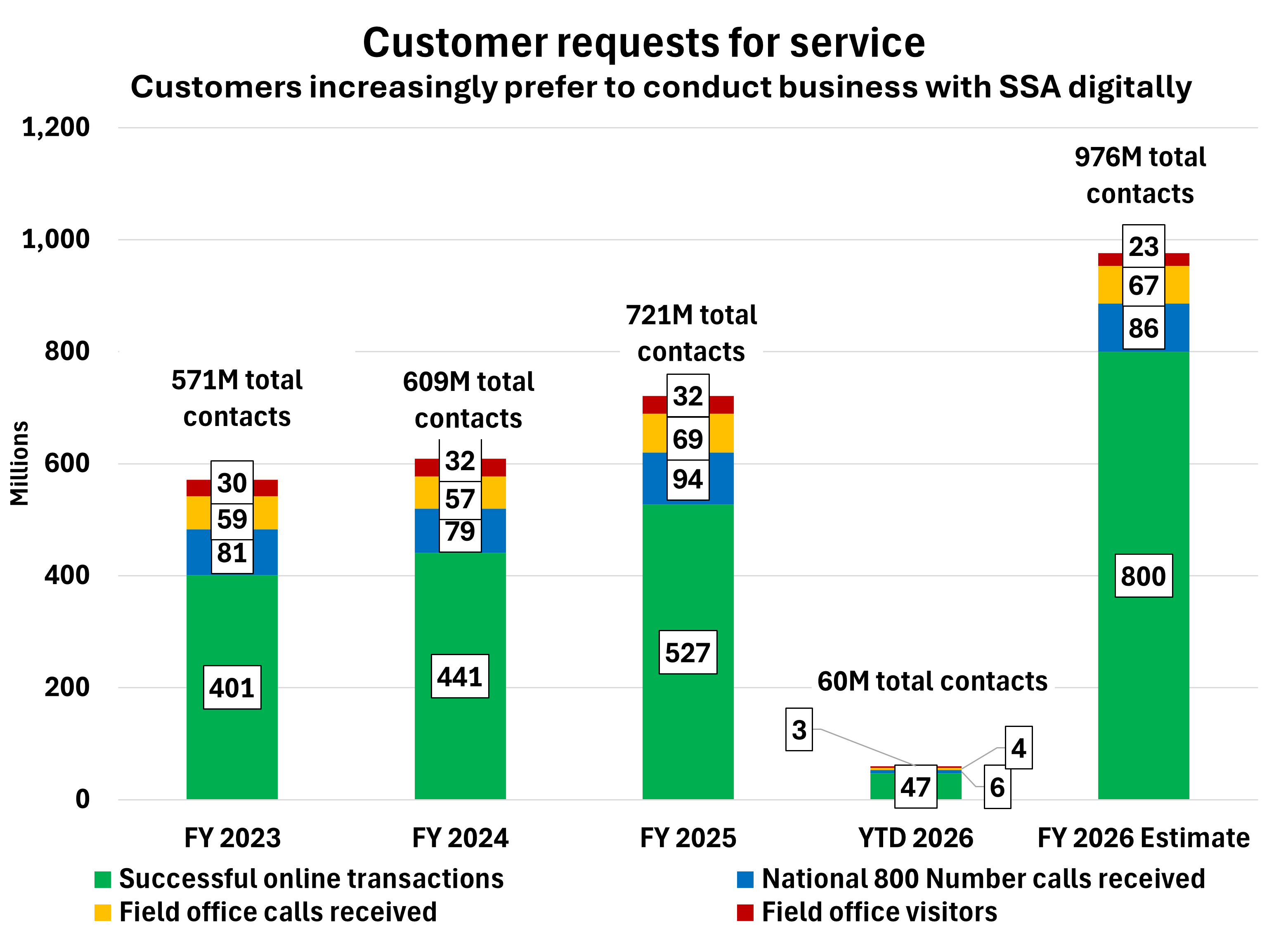
The green bars represent successful online transactions. The blue bars represent calls received on our National 800 Number. The orange bars represent calls received by our field offices across the nation. The red bars represent individuals that visit our field offices.