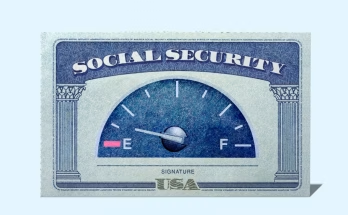
Millions of Americans are expecting another round of Social Security payments on Wednesday, May 27, 2026, but not every beneficiary will receive a deposit this week.
The Social Security Administration follows a staggered monthly payment system based largely on birth dates and benefit categories, meaning many recipients already received payments earlier in the month — while others follow completely different schedules.
As inflation and rising living costs continue affecting retirees and disabled Americans nationwide, payment dates remain critically important for households relying on Social Security income to cover rent, groceries, utilities, healthcare, and other essential expenses.
Here’s a full breakdown of who will not receive a Social Security payment on Wednesday, May 27, and why.
Who WILL Receive Payments on May 27?
The May 27 payment round is reserved primarily for beneficiaries born between the 21st and 31st of any month who receive standard Social Security retirement or disability benefits.
Scheduled Social Security Payments for May 27, 2026
| Birth Date | Payment Date |
|---|---|
| 21st–31st | Wednesday, May 27, 2026 |
Beneficiaries outside this group generally will not receive payments on Wednesday.
Who Will NOT Receive Payments on May 27?
Several major categories of Social Security recipients are excluded from this week’s payment schedule because they either already received benefits earlier in May or follow different payment systems entirely.
1. Beneficiaries Born Between the 1st and 20th
Retirees and disability beneficiaries born earlier in the month already received their May payments during previous payment rounds.
Earlier May Payment Dates
| Birth Date | Payment Date |
|---|---|
| 1st–10th | May 13, 2026 |
| 11th–20th | May 20, 2026 |
These recipients are not scheduled to receive another standard Social Security payment on May 27.
2. Supplemental Security Income (SSI) Recipients
Most Supplemental Security Income recipients follow a separate payment schedule from standard retirement and disability beneficiaries.
SSI payments are typically issued on the first day of each month.
Because June 1, 2026 falls on a Monday, SSI recipients are expected to receive June payments on schedule rather than during the May 27 distribution.
SSI Payment Timing
| Benefit Type | Typical Payment Date |
|---|---|
| Supplemental Security Income (SSI) | Usually the 1st of the month |
SSI recipients generally will not receive separate retirement payments on May 27 unless they also qualify for standard Social Security benefits.
3. Beneficiaries Receiving Social Security Before May 1997
Americans who began receiving Social Security benefits before May 1997 follow another separate payment schedule.
These beneficiaries typically receive payments on the third day of each month rather than according to birth dates.
Pre-May 1997 Beneficiaries
| Recipient Group | Typical Payment Date |
|---|---|
| Receiving Social Security before May 1997 | Usually the 3rd of each month |
As a result, these beneficiaries are not scheduled for May 27 payments.
4. Some Dual SSI and Social Security Recipients
Beneficiaries receiving both SSI and standard Social Security benefits may receive payments on different dates depending on the type of benefit.
Many already received SSI payments earlier in the month and may not qualify for another deposit on May 27 unless their retirement or disability payment schedule matches the final birth-date group.
Why Social Security Uses a Staggered Payment System
The Social Security Administration distributes payments throughout the month to help manage processing systems more efficiently.
The staggered structure also reduces strain on banking systems and federal payment operations.
More than 70 million Americans currently receive Social Security or Supplemental Security Income benefits nationwide.
Direct Deposit Remains the Most Common Payment Method
Most beneficiaries now receive payments electronically through:
- Direct deposit into bank accounts
- Direct Express prepaid debit cards
Electronic payments are generally considered:
- Faster
- More secure
- Less vulnerable to mail delays
- Easier to track
Paper checks are now used by only a small percentage of recipients.
What To Do If Your Payment Is Missing
The Social Security Administration advises beneficiaries to wait at least three mailing days before reporting a delayed or missing payment.
Possible reasons for delays can include:
- Bank processing issues
- Incorrect account information
- Federal holidays
- Fraud-prevention reviews
- Mail delivery disruptions
Beneficiaries can also review payment information through their online Social Security accounts.
Inflation Continues Increasing Pressure on Retirees
Monthly Social Security payments remain a critical source of income for millions of Americans as inflation continues affecting:
- Housing costs
- Food prices
- Healthcare expenses
- Insurance premiums
- Utilities
Although recent cost-of-living adjustments have increased benefit amounts, many retirees continue reporting financial strain in 2026.
That makes payment timing especially important for beneficiaries living on fixed monthly incomes.
June Payments Begin Soon
After the May 27 distribution is completed, the Social Security Administration will officially transition into the June 2026 payment schedule.
June retirement and disability payments will again follow the standard birth-date calendar used throughout the year.
Beneficiaries are encouraged to monitor official Social Security schedules closely to avoid confusion regarding upcoming deposit dates.
Bottom Line
Not every Social Security recipient will receive a payment on Wednesday, May 27, 2026.
The final May payment round is primarily reserved for beneficiaries born between the 21st and 31st of the month, while many other retirees, SSI recipients, and long-term beneficiaries already received payments earlier in May or follow different schedules entirely.
For millions of Americans relying on Social Security income, understanding the payment calendar remains essential as economic pressures continue affecting retirement budgets nationwide.