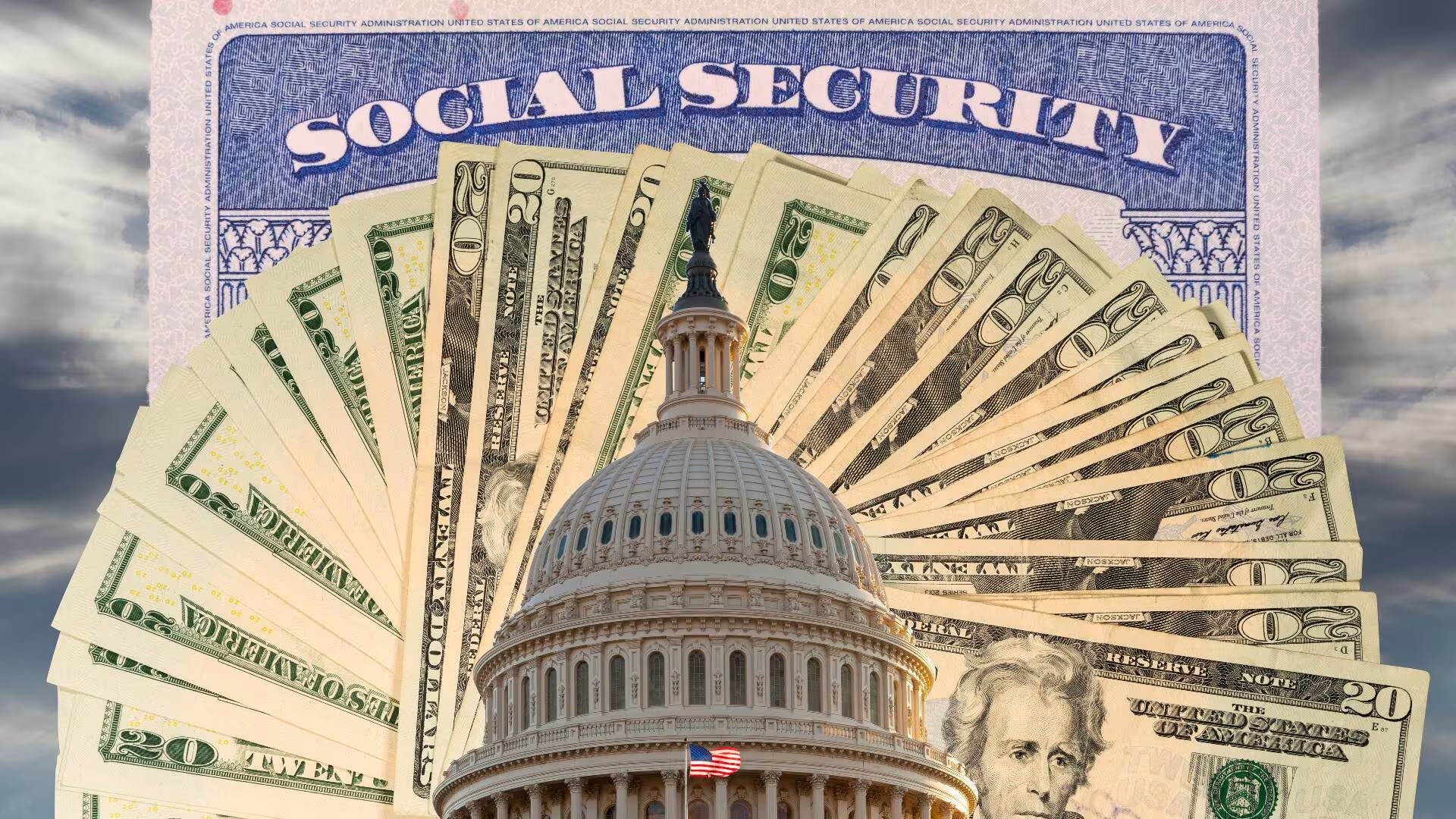
Millions of Americans who rely on Social Security could soon see one of the most significant changes to the program in decades. As lawmakers face mounting pressure to address the program’s long-term financial challenges, discussions in Washington are becoming increasingly urgent. While no final legislation has been approved, several proposals are gaining attention that could reshape benefits, taxes, and retirement planning for future generations.
For current retirees, the uncertainty has raised an important question: Will Social Security continue to provide the same level of support in the years ahead?
Why Social Security Is Under Pressure
Social Security remains one of the nation’s largest and most important retirement programs, providing monthly income to more than 70 million Americans, including retirees, disabled workers, surviving spouses, and dependent children.
The program is funded primarily through payroll taxes collected from workers and employers. For decades, these contributions generated enough revenue to cover benefits while building reserve funds.
Today, however, the situation has changed.
An aging population, longer life expectancy, lower birth rates, and slower workforce growth mean that more people are collecting benefits while fewer workers are paying into the system. As a result, Social Security now pays out more each year than it collects through payroll taxes.
The difference has been covered by the program’s trust funds, but according to current projections, those reserves could become depleted in 2032 if Congress takes no action.
That does not mean Social Security would disappear. Payroll taxes would continue to fund a substantial portion of benefits. However, current estimates indicate that beneficiaries could face an automatic reduction of approximately 22% unless lawmakers enact reforms.
Congress Faces a Narrowing Window
Although Congress has debated Social Security reform for years, the approaching funding deadline has increased pressure for lawmakers to reach a bipartisan agreement.
Several members of Congress have introduced proposals designed to strengthen the program’s finances while protecting retirees from abrupt benefit reductions.
No single proposal has emerged as the clear favorite, but many experts believe reform is becoming more likely as the projected funding deadline approaches.
History offers an important reminder. Congress intervened in 1983 when Social Security faced another financial crisis, approving a package of reforms that extended the program’s solvency for decades. Many analysts expect lawmakers to act again before across-the-board benefit reductions take effect.
One Proposal Receiving Bipartisan Attention
Among the ideas attracting support from both Democrats and Republicans is a proposal to expand the amount of earnings subject to Social Security payroll taxes.
Under current law, workers pay Social Security taxes only on wages up to an annual taxable maximum. In 2026, that limit is $184,500. Income earned above that threshold is exempt from Social Security payroll taxes.
Supporters argue that requiring high-income earners to contribute taxes on more of their earnings would generate hundreds of billions of dollars in additional revenue over time.
Some proposals would eliminate the taxable wage cap entirely, while others would apply payroll taxes only to income above a separate high-income threshold.
Advocates say this approach could strengthen Social Security without increasing payroll taxes for the vast majority of American workers.
Critics, however, argue that higher payroll taxes on top earners could discourage investment, reduce business growth, or create additional economic burdens for employers.
Other Changes Under Consideration
Lawmakers are evaluating several additional options that could become part of a broader reform package.
One frequently discussed proposal involves gradually increasing the full retirement age for younger workers. Since Americans are generally living longer than previous generations, supporters believe extending working careers could improve the program’s finances.
Another possibility is a modest increase in the Social Security payroll tax rate paid by workers and employers.
Some proposals would adjust benefit formulas so that higher-income retirees receive slower benefit growth while protecting lower-income beneficiaries.
Others would modify annual Cost-of-Living Adjustments (COLAs) by using a different measure of inflation designed to better reflect the spending habits of older Americans.
Rather than relying on one solution, many economists believe Congress could adopt a combination of several smaller reforms.
What Current Retirees Can Expect
People already receiving Social Security benefits are generally considered less likely to experience major immediate changes.
Historically, lawmakers have tried to shield current retirees from significant benefit reductions because many depend heavily on Social Security for everyday living expenses.
Future reforms are more likely to affect younger workers who have decades remaining before retirement.
Possible changes could include:
- Paying Social Security taxes on a larger share of earnings.
- Waiting longer to receive full retirement benefits.
- Adjustments to benefit calculations for future retirees.
- Changes to annual COLA calculations.
The exact details will depend on whatever legislation Congress eventually approves.
Planning Ahead Remains Important
While lawmakers continue debating reforms, financial experts encourage workers to avoid relying solely on Social Security during retirement.
Employer-sponsored retirement plans, Individual Retirement Accounts (IRAs), and personal savings can provide additional financial security regardless of future policy changes.
Workers nearing retirement may also benefit from reviewing their claiming strategy. Delaying benefits beyond full retirement age can increase monthly payments for many retirees, although the best claiming age depends on personal health, financial needs, and life expectancy.
Those already receiving benefits should continue monitoring official announcements from the Social Security Administration rather than relying on rumors circulating online.
Why Reform Is Becoming More Likely
As the projected trust fund depletion date draws closer, lawmakers have fewer options available.
The longer Congress waits, the larger any required changes may become.
Many policy analysts believe there is strong political motivation to prevent automatic benefit reductions because Social Security remains one of the nation’s most widely used federal programs.
Although negotiations may take time, most observers expect Congress to act before large across-the-board cuts occur.
The Bottom Line
A major Social Security reform appears increasingly likely as lawmakers work to address the program’s long-term funding challenges. While no final legislation has been approved, several proposals—including expanding payroll taxes for high-income earners, adjusting retirement ages, and modifying benefit formulas—remain under active discussion.
For current retirees, benefits are expected to continue largely unchanged in the near term. Younger workers, however, could see meaningful changes to how the program is funded and how future benefits are calculated.
Until Congress reaches a final agreement, the best strategy is to stay informed, continue building personal retirement savings, and prepare for gradual policy changes rather than sudden disruptions. Social Security remains a vital source of retirement income, and any reforms are likely to focus on preserving the program for future generations while maintaining support for today’s beneficiaries.