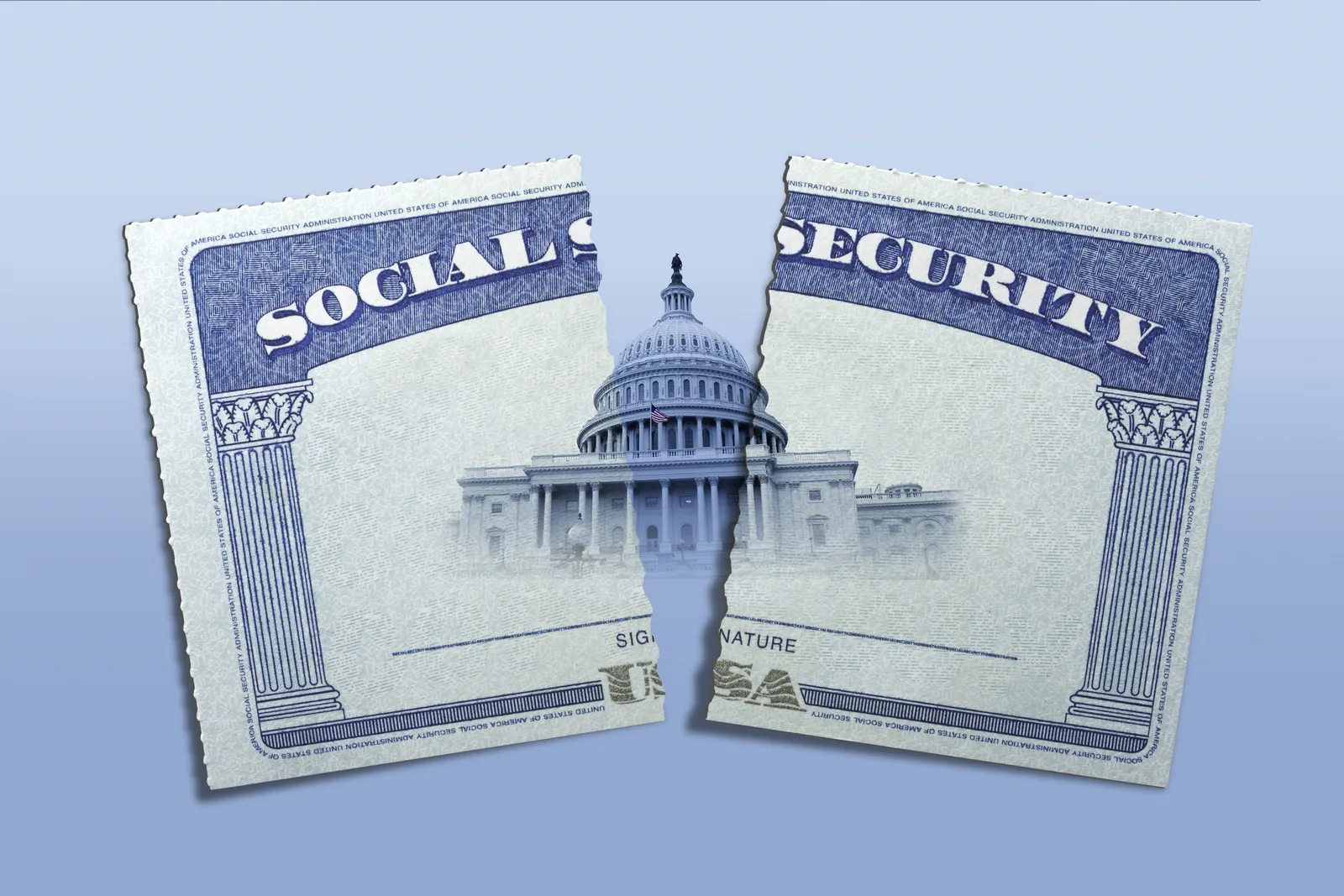
More than half of working Americans worry about outliving their money in retirement, yet many of those same people plan to begin collecting Social Security benefits early — leaving money on the table.
If you delay benefits from your full retirement age (for most people, that’s 67) until age 70, you earn delayed retirement credits — about an 8% increase each year until you hit 70.
But more than a quarter of Social Security beneficiaries begin claiming benefits at age 62, as soon as they’re eligible, even though their monthly benefit may be slashed by as much as 30%.
Just 10% expect to hold off until age 70.
“There is no single right age for claiming Social Security,” said Deb Boyden, head of US defined contribution at Schroders, which recently published its retirement survey for 2026. “What stands out, though, is how remarkably consistent this behavior has been.”
In 2024, 43% of nonretired Americans said they planned to begin claiming Social Security before age 67. That increased to 44% in 2025, Boyden said.
For now, Social Security pays, on average, about $25,000 a year in retirement benefits — scarcely enough to get by comfortably.
Read more: Social Security COLA estimate — here’s how much your benefits could rise in 2027
How delaying Social Security can pay off
The size of your Social Security check depends on your work history, lifetime earnings, retirement age, and the year you start claiming benefits.
Most Americans don’t wait or simply can’t delay until age 70 to start collecting benefits, but if you can, you wind up with more cash in your bank account.
People know that. They’ve done the math, according to the new findings.
So what’s driving these self-defeating choices? Financial need, more than likely.
“It suggests that financial necessity and financial confidence may matter more than knowledge alone,” Boyden said.
Americans are willing to forgo that extra monthly income, despite their angst about running short in retirement. “Their reasons are practical,” she added.
They include things like expecting to need the money sooner to live on, wanting access to it as soon as possible, or concerns that Social Security may run out of money or stop making payments.
To Boyden, that suggests many Americans are making personal decisions “based on current financial realities” rather than thinking about maximizing their Social Security checks in the future.
Read more: See what’s really changing in Social Security next year
‘Income needs come first’
The main reason people start their Social Security checks before they get to age 70 is “first and foremost their income needs,” said Jacob Cornell, a financial adviser based in Sarasota, Fla.
Beyond financial necessity, there are sound reasons not to delay. Health, namely.
“If you’re the oldest living family member, have a heart condition, and other family members died young, walk to the Social Security office right now,” said David Johnston, a certified financial planner at OnePoint BFG, based in Flemington, N.J.
“But if you are in good health and your parents lived to 80 or 90, don’t rush,” he said.
To get a bead on the best decision, Cade Bekanich, founder of Park Lane Financial Group, based in West Pittston, Pa., asks his clients several key questions.
For instance, how will you fund your retirement if you choose to delay taking Social Security? Are your other income streams consistent and secure enough to bridge the gap between now and when you claim? What are your health conditions?
Bekanich, added, “Importantly, if you receive a lower benefit by claiming today, will this impact your ability to afford your lifestyle down the road?”
Kerry Hannon is a Senior Columnist at Yahoo Finance. She is a career and retirement strategist and the author of 14 books, including “Retirement Bites: A Gen X Guide to Securing Your Financial Future,” “In Control at 50+: How to Succeed in the New World of Work,” and “Never Too Old to Get Rich.” Follow her on Bluesky and X.
Click here for the latest economic news and indicators to help inform your investing decisions
Read the latest financial and business news from Yahoo Finance