Although the Dow Jones Industrial Average (DJINDICES:^DJI), S&P 500 (SNPINDEX:^GSPC), and Nasdaq Composite (NASDAQINDEX:^IXIC) are doing what they do best under President Donald Trump — delivering outsize annual returns — not all is well on Wall Street.
While the stock market’s major indexes have managed to climb the proverbial wall of worry this year, inflation, driven in part by Trumpflation, may prove to be an insurmountable headwind.
President Trump floats the idea of curbing diesel exports
The trailing 12-month inflation rate reached a three-year high of 4.2% in May, primarily driven by the Trump-led Iran war and the ongoing closure of the Strait of Hormuz. Iran’s closure of the Strait of Hormuz has disrupted the flow of a fifth of the world’s crude oil supply.
Though persistently elevated core inflation, which excludes food and energy costs, is a problem, energy prices have become a real eyesore for businesses and consumers. According to AAA, diesel hit an all-time high of $6.53 per gallon on Sept. 22, up roughly 77% from the previous year.
U.S. DIESEL HITS FRESH RECORD AT $6.53
U.S. diesel prices climbed to a record $6.527 per gallon, up sharply from $3.688 a year ago.
Supply is tightening as Russian diesel exports remain restricted and disruptions continue to crude flows through the Strait of Hormuz.
Commerzbank warns diesel markets could face a difficult winter if Middle East disruptions persist and Russia extends its export restrictions.
— *Walter Bloomberg (@DeItaone) September 22, 2026
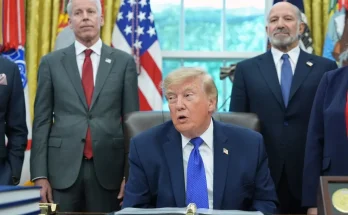
Last week, in speaking with his advisors, President Trump told reporters:
I’ve said let’s not send out the diesel. We make a lot of diesel. I’ve called for it within my people. I’ve been talking about it.
In a nutshell, Trump’s idea is to keep diesel production within our borders, thereby generating a domestic distillate surplus and quickly driving down the price.
According to the Energy Information Administration, the U.S. produces about 5.3 million barrels of distillate (diesel and heating oil) daily and consumes approximately 3.6 million barrels. Simple supply-and-demand economics suggests that when supply outpaces demand, prices decline.

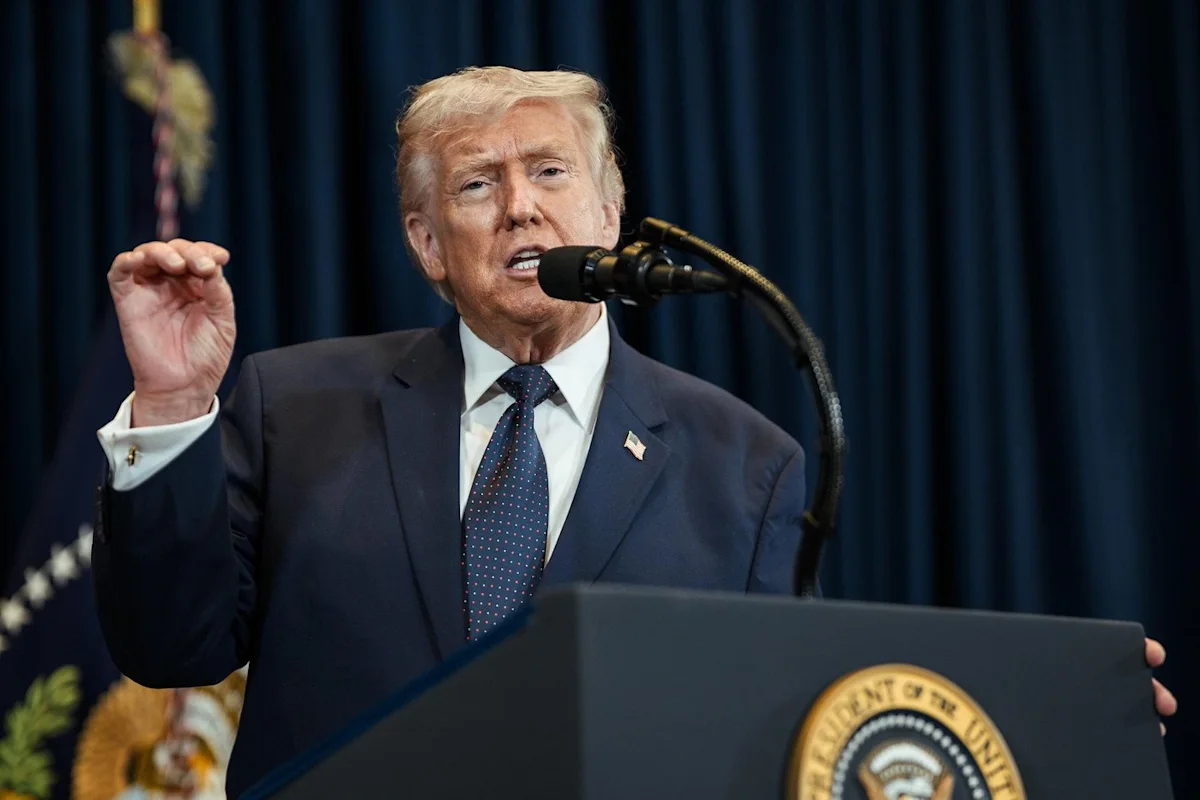
Image source: Getty Images.
Partially or fully banning diesel exports would epically backfire
But what the president has loosely proposed isn’t that simple. The unintended consequences of his actions would likely prove catastrophic domestically and globally.
On the one hand, diesel prices would probably fall for a short time frame domestically if a partial or full ban on exports were enacted. However, this supply-demand mismatch would be quickly remedied by refiners. ExxonMobil (NYSE:XOM), Chevron (NYSE:CVX), and other brand-name refineries would simply cut their production to meet domestic demand. In other words, they’re not going to continue creating a domestic oversupply that pushes the price of diesel artificially lower.
TRUMP WEIGHS DIESEL EXPORT CURBS AS PRICES HIT RECORD
President Trump says he is considering restricting U.S. diesel exports as prices reach a record $6.53 per gallon.
Oil companies are pushing back, warning restrictions could force refineries to cut production and potentially raise gasoline prices.
S&P Global estimates a ban could reduce refinery runs by nearly 2 million barrels per day, disrupting broader fuel markets.
— *Walter Bloomberg (@DeItaone) September 23, 2026
Additionally, removing up to 1.5 million barrels per day of diesel exports from the U.S. would throw a monkey wrench into the global energy supply chain. We’re talking about higher global energy prices and additional costs for rerouted/altered distillate shipments.
All the while, the root cause of the largest modern-day energy supply disruption and persistently elevated domestic inflation, the Iran war, and more specifically the closure of the Strait of Hormuz, has no remedy.
Even if the U.S. and Iran agreed to a peace deal today, it would take months to ramp up energy infrastructure in the region to pre-war capacity.
There’s no quick fix to record-high diesel prices, and sooner or later, the Dow Jones Industrial Average, S&P 500, and Nasdaq Composite won’t be able to shake off this reality.
Should you buy stock in S&P 500 Index right now?
Before you buy stock in S&P 500 Index, consider this:
The Motley Fool Stock Advisor analyst team just identified what they believe are the 10 best stocks for investors to buy now… and S&P 500 Index wasn’t one of them. The 10 stocks that made the cut are built for long-term growth and could produce monster returns in the coming years.
Consider when Netflix made this list on December 17, 2004… if you invested $1,000 at the time of our recommendation, you’d have $383,680!* Or when Nvidia made this list on April 15, 2005… if you invested $1,000 at the time of our recommendation, you’d have $1,382,954!*
That performance is why people listen. With a track record of beating the S&P 500 by 4x, Stock Advisor offers a distinct advantage. Don’t miss the latest top 10 list, available with Stock Advisor, and join an investing community built for the long haul.
*Stock Advisor returns as of September 28, 2026.
Sean Williams has no position in any of the stocks mentioned. The Motley Fool has positions in and recommends Chevron. The Motley Fool has a disclosure policy.
President Donald Trump Has Floated the Idea of a Partial or Full Ban on Diesel Exports, but the Unintended Consequences of Such Actions Would Be Catastrophic was originally published by The Motley Fool