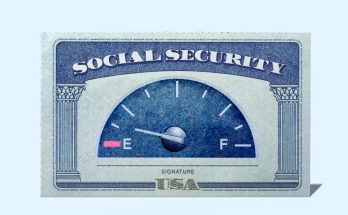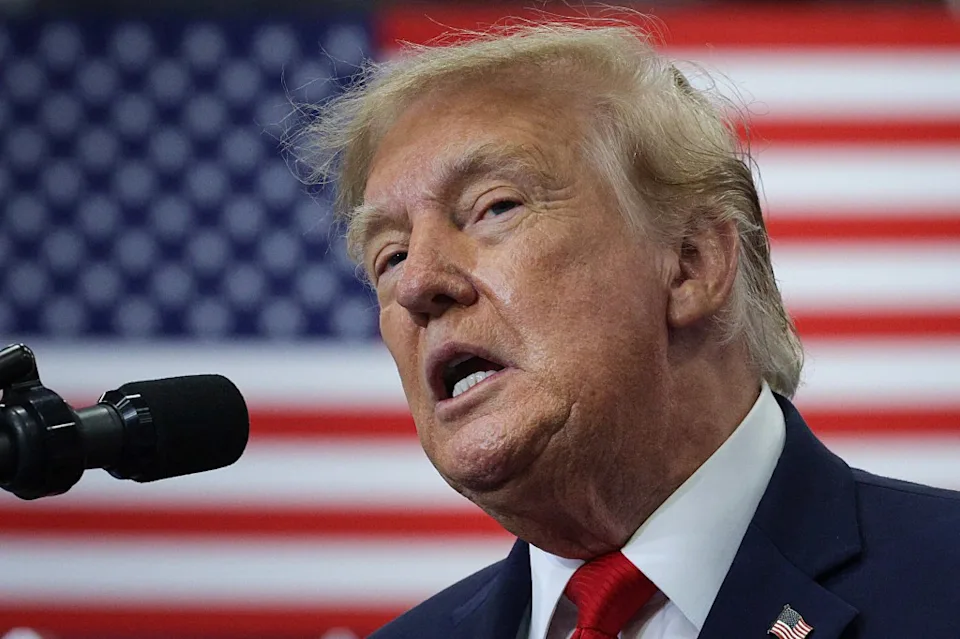
President Donald Trump continues to downplay the political and economic significance of “affordability” in the U.S., putting him at odds with the vast majority of voters who see this as the most salient issue for the country weeks out from the 2026 midterms.
The president has repeatedly framed affordability as a “hoax” conjured up by political rivals to undermine his domestic agenda. Speaking at the G7 summit in June, Trump called it a “fake word made up by the Democrats,” who he said bore full responsibility for rising prices.
“They use the word affordability, right? It’s fake,” Trump said on the first night of the Republican National Convention in September. “They are so fake because it was them that caused the affordability—to use their word—crisis.” He went on to say that almost all prices were “rapidly going down” on his watch.
And this week, Trump again accused his rivals of being disingenuous when it came to the issue of consumer costs, telling a crowd in Wasilla, Alaska that “every time they want to try and get me, they say affordability.”
But Americans of all political persuasions seem to disagree, according to a new Harris Poll conducted for The Guardian, both with the extent of this issue and who currently shoulders the blame. According to the survey, published on October 15, 96 percent of Republicans think the U.S. is in the midst of an affordability “crisis.”
“President Trump began carrying out an aggressive, pro-growth economic agenda on day one, which has been and will continue to deliver tangible wins for the American people,” White House spokesman Matthew Middleton told Newsweek when approached for comment on the poll.
“This President is delivering on his promise to stop Biden’s inflation crisis, drive economic growth, and create jobs, and there will be more to come in the next two years,” he added.
What the Poll Shows
The poll was fielded from September 24 to October 3 among 3,998 adults, 67 percent of whom said high grocery and gas prices were a top issue in the upcoming midterms.
Only 28 percent of the surveyed Republicans said they thought the economy was improving, down from 39 percent last February and 49 percent immediately before the launch of the Iran war.
And both sentiment and economic conditions appear particularly bleak in rural parts of the country, which decisively broke for Trump in 2024. According to The Guardian, four out of 10 rural Americans admit to living in “survival mode”—defined as a situation where “one surprise bill could sink them.” This compares to 35 percent and 27 percent of urban and suburban Americans, respectively.
Seventy-one percent of Democrats said that their party had a solution to the affordability “crisis,” compared to only 59 percent of Republicans. Meanwhile, half of independents said that neither party had a solution.
Pollsters also found that nearly 61 percent of Americans think the U.S. is currently in a recession, despite the fact that the economy has not yet undergone the two consecutive quarters of negative gross domestic product (GDP) growth typically treated as the technical prerequisite for a downturn.
Economists have in recent months noted a discrepancy between the public’s feelings about the economy and its observed strengths. This has been attributed by some to consumers’ limited exposure to things like GDP growth and stock market gains when compared to gas prices and grocery bills.
Cost of Living Creates Midterm Headache for Trump
On October 14, the Bureau of Labor Statistics (BLS) said that the annualized inflation rate had jumped to 3.7 percent in September from 3.4 percent in August, slightly ahead of consensus analyst forecasts.
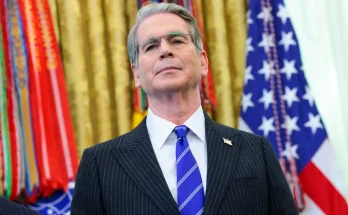
White House National Economic Council Director Kevin Hassett told NewsNation that there was a “bunch of good news” beyond the headline figure, which he said was driven by a “temporary” surge in energy costs. Hassett pointed to flat or declining prices for certain food and drug categories in September.
However, most analysts saw the report in a poorer light, given ongoing concerns from policymakers and the public about affordability—expected to play a significant role in the upcoming elections.
Some 37 percent of respondents told Economist/YouGov pollsters that inflation was their top issue in the midterms, beating all other choices and marking the highest share for rising prices since tracking began in 2022. And an AP-NORC poll of 2,140 adults, fielded September 24 to 28, found that 65 percent blamed stubborn inflation on Trump, with 26 percent approving of his broader economic stewardship and only 17 percent of his approach to the cost of living.
Matt A. Barreto, Faculty Director for the UCLA Voting Rights Project, told Newsweek that Trump was currently facing a “very negative political environment” due in part to these concerns
“President Trump’s ratings are understandably very low, and he has not provided any clear message or guidance for the country except chaos and lack of concern over affordability,” he said. “Democrats can take advantage of this with a clear message of their own, that they will fight to bring costs down and fight for everyday middle-class voters.”
However, he noted that past elections in the U.S. have been won on “razor thin margins” and slight differences in turnout.
“We don’t yet know what voter turnout will be and Republicans do hold an advantage on fundraising and advertising spending,” he added.
Want access to the latest insights on politics and economics? Sign up here to follow the money with Hugh Cameron and Newsweek’s Accountable Newsletter each week, from the fiscal debates dominating Washington to the real-world impact on your wallet.
Newsweek’s reporters and editors used Martyn, our AI assistant, to produce this story. Learn more about Martyn here.
Contact Newsweek editors on this story: Daniel Orton and Paul Donnelley.