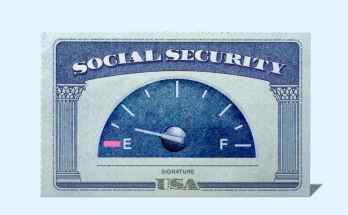
That is now the full retirement age for Social Security for people born in 1960 or later. This does not mean Social Security is gone. It does not mean people can no longer claim at 62. But it does mean millions of workers must wait longer to receive their full unreduced retirement benefit. The Social Security Administration lists full retirement age as 67 for people born in 1960 or later. (ssa.gov)
For retirees, widows, divorced spouses, and workers in their 50s and 60s, this matters because claiming age can permanently change the size of the monthly check.
What “Full Retirement Age” Means
Full retirement age, often called FRA, is the age when you can receive 100% of your earned Social Security retirement benefit.
It is not the same as the earliest claiming age.
| Age | What It Means |
|---|---|
| 62 | Earliest age to claim retirement benefits |
| 67 | Full retirement age for people born in 1960 or later |
| 70 | Latest age to earn delayed retirement credits |
So yes, people can still claim Social Security at 62.
But if your full retirement age is 67 and you claim at 62, your benefit may be reduced by as much as 30% for life. SSA’s own early-retirement chart shows a 30% reduction for people born in 1960 or later who claim at 62. (ssa.gov)
Full Retirement Age by Birth Year
Here is the simple SSA schedule:
| Birth Year | Full Retirement Age |
|---|---|
| 1954 or earlier | 66 |
| 1955 | 66 and 2 months |
| 1956 | 66 and 4 months |
| 1957 | 66 and 6 months |
| 1958 | 66 and 8 months |
| 1959 | 66 and 10 months |
| 1960 or later | 67 |
This change did not happen overnight. The increase was phased in over many years, but for younger retirees, the final age is now clear: 67. (ssa.gov)
Why This Feels Like a Big Deal
For many Americans, working until 67 is not easy.
Some people work in jobs that are hard on the body. Others deal with illness, caregiving, layoffs, or age discrimination before they are ready to retire.
That is why the retirement age feels personal.
It can affect:
- When you can stop working
- How much your monthly check will be
- Whether you need savings to bridge the gap
- Whether you claim early and accept a smaller check
- Whether you delay for a larger benefit
- How secure you feel in retirement
For older women, especially widows and divorced retirees, this can be especially important. Many women rely heavily on Social Security for independence and stability.
What Happens If You Claim at 62?
Claiming at 62 gives you money sooner.
But the tradeoff is a smaller monthly check.
| If Your Full Benefit at 67 Is… | Approximate Amount at 62 After 30% Reduction |
|---|---|
| $1,500 | $1,050 |
| $1,800 | $1,260 |
| $2,000 | $1,400 |
| $2,400 | $1,680 |
| $3,000 | $2,100 |
That reduction is usually permanent.
So if someone claims early because they cannot keep working, they may have to live with a smaller check for the rest of retirement.
What Happens If You Wait Until 70?
Waiting can increase your benefit.
For people born in 1960 or later, SSA says claiming at age 70 can provide 124% of the monthly benefit because the worker delayed benefits for 36 months after full retirement age. (ssa.gov)
SSA also lists delayed retirement credits at 8% per year for people born in 1943 or later. (ssa.gov)
| Claiming Age | General Benefit Effect |
|---|---|
| 62 | Reduced benefit |
| 67 | Full benefit |
| 70 | Largest benefit from delayed credits |
Waiting is not right for everyone. Health, savings, family needs, and job situation all matter.
But for those who can wait, the monthly check can be much larger.
Maximum Social Security Benefits in 2026
For 2026, SSA says the maximum retirement benefit is:
| Claiming Age | Maximum Monthly Benefit in 2026 |
|---|---|
| Full retirement age | $4,152 |
| Age 70 | $5,181 |
These are maximums, not averages. To receive the maximum, a worker generally needs a long career with very high earnings and must claim at the right age. (ssa.gov)
Most retirees receive much less than the maximum.
Why Some People Still Claim Early
Even with the reduction, many people claim before full retirement age.
Why?
Because real life gets in the way.
People may claim early because of:
- Health problems
- Job loss
- Caregiving duties
- No retirement savings
- High rent or mortgage payments
- Medical bills
- Physical work they can no longer do
- Fear about Social Security’s future
For some retirees, waiting until 67 or 70 is simply not realistic.
That does not mean they made a bad choice. It means they made the choice that fit their life.
Why This Matters for Widows
Widows should be especially careful before making a Social Security decision.
Survivor benefits have different rules from regular retirement benefits.
A widow may be able to receive benefits based on a late spouse’s work record, and the claiming decision can affect long-term income.
A widow should review:
| What to Check | Why It Matters |
|---|---|
| Her own retirement benefit | May be higher or lower than survivor benefit |
| Late spouse’s benefit | Could provide a larger monthly amount |
| Claiming age | Can affect survivor benefit size |
| Remarriage rules | May affect eligibility |
| Medicare deductions | Can reduce the actual deposit |
For many widows, Social Security is the main protection against financial insecurity.
Why This Matters for Divorced Retirees
Divorced retirees may also need to review their options.
A divorced spouse may qualify for benefits based on an ex-spouse’s work record if certain rules are met, including the marriage lasting at least 10 years.
This can matter for women who:
- Earned less than a spouse
- Took time out of work for caregiving
- Divorced later in life
- Have little retirement savings
- Depend mostly on Social Security
The full retirement age still matters because claiming early can reduce benefits.
The Big Misunderstanding
Many people hear “retirement age is 67” and think they cannot get Social Security before 67.
That is not true.
The real rule is:
You can claim at 62, but you do not get your full benefit unless you wait until your full retirement age.
For people born in 1960 or later, that full retirement age is 67.
What Workers Should Do Now
If you are in your 50s or 60s, now is the time to plan.
| Step | Why It Helps |
|---|---|
| Check your SSA statement | Shows estimated benefits |
| Know your full retirement age | Helps avoid surprises |
| Compare ages 62, 67, and 70 | Shows how claiming age changes your check |
| Review Medicare timing | Medicare usually starts at 65 |
| Build emergency savings if possible | Helps avoid claiming too early |
| Consider health and job stability | Waiting may not be realistic for everyone |
| Talk with spouse or family | Survivor benefits may matter |
The goal is not to scare people.
The goal is to avoid making a permanent decision without understanding the numbers.
The Bottom Line
The retirement age many Americans have dreaded is now the standard for younger retirees:
Full retirement age is 67 for people born in 1960 or later.
You can still claim Social Security at 62, but your monthly benefit may be permanently reduced. You can wait until 70, and your monthly benefit may be higher.
For retirees, widows, divorced spouses, and workers nearing retirement, the message is simple:
Know your age. Know your benefit. Know your options before you claim.
Social Security is still there.
But the age you choose can shape your income for the rest of your life.