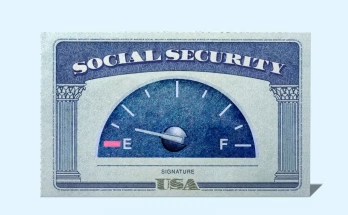
A proposed Social Security rule change could put benefits at risk for nearly 400,000 low-income Americans.
But there is one important detail:
This is mainly about SSI, not regular Social Security retirement checks.
SSI stands for Supplemental Security Income. It helps very low-income older adults, people with disabilities, and blind Americans pay for basic needs like rent, food, clothing, and medicine.
For many people who receive SSI, the monthly payment is already small. A cut of even a few hundred dollars could be devastating.
What Is the Proposed Change?
The issue involves a rule called the public assistance household rule.
In 2024, the Social Security Administration expanded this rule so that households receiving SNAP food assistance could count as public assistance households. SSA said this change would help more people qualify for SSI, increase some SSI payments, and reduce reporting burdens for people living in low-income households. (ssa.gov)
Now, a federal proposal would reverse part of that change by removing SNAP from the list of programs that help a household qualify as a public assistance household. The proposal would also return to the older rule that generally required every household member to receive certain public assistance for the household to qualify. (reginfo.gov)
In simple terms:
| Current Rule | Proposed Change |
|---|---|
| SNAP can help a household count as a public assistance household | SNAP would no longer count the same way |
| Some SSI recipients avoid reductions tied to family support | Some could face reductions again |
| Some families have less paperwork | More reporting could return |
| More low-income people may qualify for SSI | Some could lose part or all of SSI |
Who Could Be Affected?
The people most at risk are SSI recipients who live with family or friends in low-income households.
This could include:
- Older adults who moved in with adult children
- Disabled adults living with parents
- People with serious health problems
- Low-income seniors who cannot afford to live alone
- Families who receive SNAP food assistance
- People who depend on SSI as their only income
The Center on Budget and Policy Priorities estimated that removing SNAP from the rule could lead to benefit cuts for more than 275,000 people and loss of eligibility for more than 100,000 more, based on a 2024 SSA analysis. (cbpp.org)
That is why many reports are saying the change could affect nearly 400,000 Americans.
Why Living With Family Matters
SSI has strict rules about income, resources, and living arrangements.
If someone receives free or reduced-cost shelter from another person, SSA may treat that help as in-kind support and maintenance. That can reduce the SSI payment.
SSA says SSI may be reduced by one-third if someone lives in another person’s household and others provide meals and shelter. SSA’s own example shows a 2026 SSI payment reduced from $994 to $662.67 in that situation. (ssa.gov)
That kind of reduction can change everything for someone who has almost no other income.
How Much Could Benefits Be Cut?
The amount depends on the person’s situation.
But some SSI recipients could lose hundreds of dollars per month.
For example:
| Situation | Possible Result |
|---|---|
| SSI recipient lives with family | |
| Family receives SNAP | |
| Recipient cannot pay full shelter costs | |
| SNAP no longer helps household qualify | |
| SSI may be reduced because family support is counted |
A person receiving the full federal SSI amount could potentially see a major reduction if SSA decides the person is receiving shelter support from the household.
For someone already living below or near the poverty line, that is not a small cut.
This Is Different From Retirement Social Security
This is very important.
This proposed change does not mean every retiree’s Social Security check is being cut.
It mainly concerns SSI, which is different from regular Social Security retirement benefits.
| Program | Who It Helps |
|---|---|
| Social Security retirement | Workers who paid into Social Security |
| SSDI | Disabled workers with enough work credits |
| Survivor benefits | Widows, widowers, children, and certain family members |
| SSI | Very low-income older adults and people with disabilities |
Some older adults receive both Social Security and SSI.
Those people should pay close attention because their SSI portion could be affected if the rule changes.
Why This Matters for Older Women
This issue could matter deeply for older women living on a fixed income.
Many widows, divorced retirees, and older women living alone have very limited savings. Some move in with adult children because rent, utilities, groceries, and medical costs are too high.
For these women, SSI can help cover:
- Food
- Medicine
- Rent
- Utilities
- Transportation
- Medicare-related costs
If an older woman moves in with family because she cannot afford to live alone, she should not assume her SSI amount will stay the same forever. Living arrangements can affect SSI.
What Families Should Do Now
If you or someone you love receives SSI, here are smart steps to take:
| Step | Why It Helps |
|---|---|
| Check whether the benefit is SSI, Social Security, or both | Rules are different |
| Review living arrangements | Household support can affect SSI |
| Keep records of rent or shelter payments | Helps show contribution to household costs |
| Save SNAP and benefit notices | May matter for eligibility reviews |
| Report changes to SSA on time | Avoids overpayments or penalties |
| Watch for official SSA notices | Do not rely only on rumors |
| Ask a benefits counselor or legal aid office for help | SSI rules are complicated |
SSA says people must report changes in living arrangements within 10 days after the month in which the change occurs. (ssa.gov)
Watch Out for Scams
Whenever Social Security changes are in the news, scammers become more active.
Be careful if someone calls, texts, or emails and says:
- Your benefits are being stopped immediately
- You must pay a fee to protect your check
- You must give your full Social Security number
- You need to send money by gift card, wire transfer, or cryptocurrency
- You will be arrested if you do not respond
Do not panic. Do not give out personal information.
Use only official SSA communication or speak with a trusted benefits counselor.
The Bottom Line
A proposed Social Security rule change could cut benefits for nearly 400,000 Americans, but the issue is mainly about SSI, not regular retirement Social Security.
The people most at risk are low-income older adults and people with disabilities who live with family or friends, especially in households that receive SNAP.
For some, the change could mean a smaller monthly SSI payment.
For others, it could mean losing SSI eligibility altogether.
The most important message is simple:
If you receive SSI and live with family, pay close attention.
This is not a reason to panic. But it is a reason to stay informed, keep records, and watch for official notices from Social Security