A major Social Security change may be getting closer.
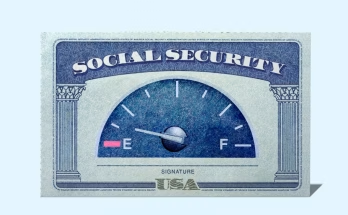
For years, many Americans have heard that Social Security has a money problem. Now, that problem is not far away. The latest official projection says the combined Social Security trust funds could run short in 2034 if Congress does not make changes. At that point, the program would still have money coming in, but it may only be able to pay about 81% of scheduled benefits. (ssa.gov)
That does not mean Social Security is ending.
But it does mean future retirees — and possibly some current retirees — should pay attention.
What Is the Big Change?
The biggest issue is simple:
Social Security may not have enough money to pay full benefits in the future.
Social Security gets most of its money from payroll taxes. Workers pay into the system, and that money helps pay benefits to retirees, people with disabilities, survivors, and families.
But more people are retiring. Americans are also living longer. That means more money is going out each month.
If lawmakers do not act, Social Security may have to pay reduced benefits in the future.
Does This Mean Social Security Is Going Away?
No.
This is important.
Social Security is not going away.
Even if the trust fund runs short, payroll taxes would still come in. That money would still be used to pay benefits.
The real risk is not that checks stop completely. The risk is that checks could be smaller than expected.
| Question | Simple Answer |
|---|---|
| Is Social Security ending? | No |
| Will checks stop completely? | Not expected |
| Could benefits be reduced? | Yes, if Congress does nothing |
| Can Congress fix it? | Yes |
| Should retirees panic? | No, but they should stay informed |
How Much Could Benefits Be Cut?
If no changes are made, future benefits could be reduced.
For example, if only 81% of scheduled benefits could be paid, a person expecting $2,000 a month might receive about $1,620 instead.
Here are simple examples:
| Expected Monthly Benefit | Possible Amount at 81% | Possible Monthly Loss |
|---|---|---|
| $1,500 | $1,215 | $285 |
| $2,000 | $1,620 | $380 |
| $2,500 | $2,025 | $475 |
| $3,000 | $2,430 | $570 |
These are only examples. They are not final payment amounts.
Congress could still make changes before any reduction happens.
Who Could Be Affected?
A future Social Security change could affect many groups.
Current Retirees
People already receiving benefits are often protected when lawmakers discuss changes. But that does not mean they should ignore the issue.
Current retirees should watch for possible changes to:
- Cost-of-living increases
- Taxes on Social Security
- Medicare deductions
- Overpayment rules
- Benefit payment rules
People Close to Retirement
People in their 50s and 60s may need to pay the most attention.
They are close to retirement, but future rule changes could still affect them.
Possible changes could include:
- A higher full retirement age
- New benefit formulas
- Smaller future increases
- Higher taxes for some workers
Younger Workers
Younger workers may see the biggest changes over time.
They may have to:
- Work longer
- Pay more in payroll taxes
- Save more outside Social Security
- Expect Social Security to cover less of their retirement income
What Changes Could Congress Make?
Congress has several options. None are final yet.
| Possible Change | What It Could Mean |
|---|---|
| Raise payroll taxes | Workers may pay more |
| Raise the wage cap | Higher earners may pay more |
| Raise full retirement age | Future retirees may wait longer |
| Change benefit formula | Some checks may grow more slowly |
| Change COLA rules | Yearly increases may be different |
| Protect lower-income retirees | Smaller checks may get extra protection |
Lawmakers may choose one change or a mix of several changes.
Why This Matters for Monthly Checks
For many older Americans, Social Security is not extra money.
It helps pay for basic needs.
| Monthly Expense | Why Social Security Matters |
|---|---|
| Rent or mortgage | Helps keep housing stable |
| Groceries | Covers food costs |
| Utilities | Pays electric, gas, and water bills |
| Medicine | Helps with prescriptions |
| Medicare premiums | Often deducted from benefits |
| Transportation | Helps pay for gas, insurance, or rides |
Even a small cut could hurt retirees who live on a fixed income.
What Retirees Should Do Now
No one knows exactly what Congress will do. But retirees and workers can still prepare.
Here are smart steps:
| Step | Why It Helps |
|---|---|
| Check your Social Security statement | Make sure your earnings record is correct |
| Know your full retirement age | It affects your monthly benefit |
| Review your claiming plan | Claiming early can reduce checks |
| Plan for Medicare costs | Premiums can lower your deposit |
| Keep some emergency savings | Helps if expenses rise |
| Avoid relying only on Social Security | Gives you more protection |
The Bottom Line
A major Social Security change may be closer than many people think.
Social Security is not ending. Monthly benefits are still being paid. But the program faces a serious funding problem in the years ahead.
If Congress does nothing, future benefits could be lower than promised.
For retirees, the best message is simple:
Do not panic — but do pay attention.
Social Security will likely remain a major source of retirement income for millions of Americans. But future rules may not look exactly like today’s rules.